Workday Shutdown Ritual: 7 Simple Steps to Unplug Fast
It’s 5:47 p.m. You tell yourself you’re done, but your laptop is still open, a chat notification is blinking, and your brain is replaying a meeting from noon. Sound familiar? A simple workday shutdown ritual can fix that. It’s a short, repeatable set of actions that tells your mind the job is finished, even when your “office” is a corner of the bedroom. You don’t need special gear or a free hour. You need about ten minutes and a little consistency. Below, you’ll find seven steps you can mix and match, plus a look at why home offices make switching off so hard in the first place.
Why a Home Office Is So Hard to Leave
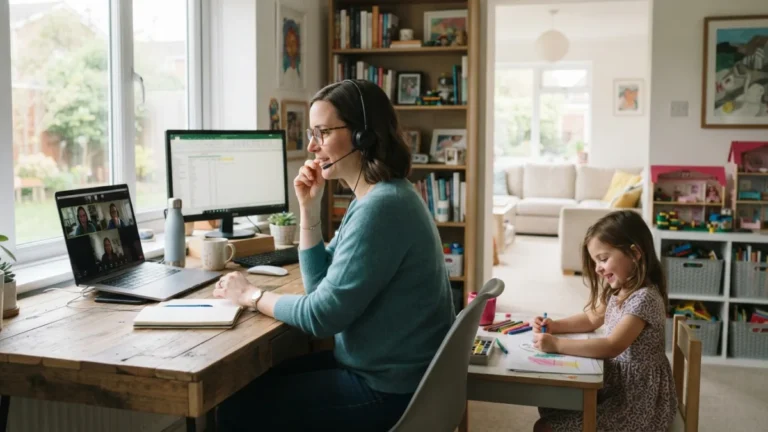
Healthy work from home boundaries used to arrive for free. The commute, the office door, and the sight of coworkers packing up all signaled that the day was over. At home, those cues vanish. Your desk sits a few steps from the sofa, your phone holds both family photos and work email, and nobody walks past to say goodnight. So work lingers. It slips into dinner, into the shower, into the 2 a.m. stare at the ceiling. The answer isn’t more willpower. It’s replacing the missing cues with ones you build yourself. That’s all a shutdown routine really is: a handmade version of walking out the office door and heading for the parking lot. If you want to dig deeper, our guide on How to Structure Your Day When You Work From Home covers this in more detail.
What Happens When Work Never Really Ends
Constant availability is a fast track to work from home burnout. The World Health Organization describes burn-out as an occupational phenomenon linked to chronic workplace stress that hasn’t been successfully managed. Its main signs are exhaustion, growing mental distance from the job, and reduced effectiveness. Home-based workers aren’t the only ones at risk, but blurry edges between work and life can make the problem easier to miss. You never fully rest, so you never fully recover. A workday shutdown ritual won’t fix a crushing workload or a demanding boss. What it can do is protect your evenings, which is when your mind and body get the chance to recharge.
The 7-Step Workday Shutdown Ritual
Pick the steps that suit your life and drop the rest. Together they take about 10 to 15 minutes. Do them in the same order each day, so your brain learns the pattern and starts to relax as soon as step one begins.
Step 1: Run Through an End of Day Checklist
An end of day checklist turns the vague feeling of “I should check one more thing” into a clear yes or no. Keep it short enough to finish in three minutes. Write it once, tape it near your monitor, and use it daily. Here’s a starter version:
- Did I answer anything urgent or time-sensitive?
- Did I note any follow-ups I promised?
- Did I check tomorrow’s calendar?
- Did I pick my top three tasks for tomorrow?
That last item matters most. When tomorrow’s priorities are already written down, your brain stops rehearsing them tonight. The list also gives you a finish line. Once every box is ticked, you’re allowed to be done, and you can say so without guilt. This connects closely with another common issue — see Weekly Planning Ritual: 7 Easy Steps for Remote Workers for more on that.
Step 2: Empty Your Head With a Brain Dump
A brain dump before bed works for some people, but doing it at the end of your workday is even better, because the worries never get a chance to follow you upstairs. Grab a notebook or a blank document and write down everything still floating around: half-formed ideas, nagging worries, tasks you’re afraid of forgetting. Don’t organize it. Don’t edit it. Just get it out. Psychologists have long studied the Zeigarnik effect, the idea that unfinished tasks tend to stick in memory. Writing things down gives those loose ends a safe home outside your head. Close the notebook when you finish. That small physical action tells you the thoughts are stored, not lost.
Step 3: Close the Digital Doors
Your laptop and phone are the new office hallway, and they never lock up on their own. So do it yourself. Sign out of email and chat apps, not just minimize them. Quit the browser tabs that hold work dashboards. Turn off work notifications on your phone, or use a focus mode that silences them after a set hour. If you share one computer for everything, create a separate user profile for work and log out of it at the end of the day. Then shut the lid or power the machine down fully. This step is the center of any good workday shutdown ritual because it removes the temptation. A closed laptop can’t tempt you with “just a quick look.”
Step 4: Tidy Desk After Work in Two Minutes
A tidy desk after work gives your eyes a clean signal that the day has ended. You don’t need a deep clean. Set a two-minute timer and move fast. Stack papers, put pens in a cup, carry coffee mugs to the kitchen, and wipe the surface if it’s dusty. If your desk shares space with the dining table, pack everything into a box or bag and slide it out of sight. The point is simple: you walk past this spot all evening, and you don’t want it staring back at you with unfinished business. A cleared desk also makes tomorrow’s start easier, which is a small gift from your future self.
Step 5: Say a Closing Phrase
To stop thinking about work, give your brain a clear final line. Pick a short phrase and say it out loud, or even in a whisper, as you close the laptop. “Done for today.” “Office closed.” “Shutdown complete.” It may feel silly the first week. That’s fine. Rituals work through repetition, and spoken words add a sense of finality that silent thoughts don’t. Pair the phrase with a physical move, like switching off your desk lamp or pushing in your chair. Over time, the phrase becomes a trigger. When a work worry pops up at 8 p.m., you can answer it with the same sentence: “Already handled. Office is closed.” You might also find our article on Deep Work vs. Shallow Work: How to Protect Your Focus Time helpful here.
Step 6: Take a Fake Commute
Fake commute ideas sound silly until you try one. Your brain likes transitions, and a short trip, even a pretend one, creates distance between “work you” and “home you.” The key is to leave your workspace and come back to your home life from a different direction. Here are some options that work in small apartments and big houses alike:
- Walk around the block, then enter through the front door.
- Listen to a podcast or playlist you save only for this time.
- Stretch or do a short bike ride.
- Stand on the balcony or by a window for five minutes.
- Run a quick errand, like picking up groceries.
Aim for 10 to 20 minutes. Bad weather? Walk laps inside the house with music on.
Step 7: Build an Evening Transition Routine
Your evening transition routine is the final step, and it should feel like a reward, not another chore. Change out of your work clothes, even if that just means swapping a shirt. Take a shower, make a cup of tea, or start cooking dinner. Choose something that uses your hands and your senses, because that pulls attention away from screens and spreadsheets. Dim the lights later in the evening and keep work devices out of the bedroom. The CDC offers general sleep resources if you’d like tips on winding down. Whatever you choose, repeat it nightly. After a couple of weeks, the routine itself becomes the signal that work is over.
Make the Ritual Stick
Start small. If seven steps feels like too much, begin with three: the checklist, closing the laptop, and a ten-minute walk. Add the rest as the habit settles in. Try to finish at roughly the same time each day, but forgive yourself on chaotic days. A shortened workday shutdown ritual still beats none at all. Tell your family or roommates what you’re doing, so they know that “closing time” is real. And if your job truly requires evening availability, set a narrow window for it instead of staying half-on all night. The goal isn’t perfection. It’s giving your brain a dependable way to say, “That’s enough for today,” and then actually believing it. For a related walkthrough, check out The Perfect Morning Routine for Remote Workers (Step-by-Step).
FAQ: Workday Shutdown Ritual
How long should a workday shutdown ritual take?
Most people need 10 to 15 minutes. You can start with as little as five minutes if your schedule is tight. Consistency matters more than length, so choose a version you can repeat every day.
What if I can’t stop thinking about work after I log off?
Write the thought down in a notebook, then repeat your closing phrase. Your brain often replays tasks because it fears forgetting them. Once a thought is safely written down, it usually loses its grip. A walk or a hands-on activity can help too.
Do I need a separate room to make this work?
No. A dedicated room helps, but it’s not required. If you work at the kitchen table or in the bedroom, pack your gear into a bag or box at the end of the day. Hiding the workspace sends the same “we’re done” signal.
Can a shutdown ritual help with burnout?
It can support recovery by giving you real downtime, but it isn’t a cure. If you feel constantly exhausted, detached, or hopeless about your job, talk with a doctor or mental health professional, and consider raising workload concerns with your employer.
What should I do if I work across time zones or have a flexible schedule?
Choose your own “closing time” each day and run the same steps then, even if it changes. If you must return later, treat it as a separate, short session with its own start and end, rather than leaving work open all evening.