Building Movement Into Your Remote Workday
Working from your kitchen table or home office sounds great until you realize you haven’t left your chair in five hours. A remote workday can quietly turn into one long sitting session, broken only by trips to the coffee maker and the occasional Zoom call. That lack of movement adds up faster than most people realize, and it can leave you stiff, sluggish, and dealing with aches that never existed when you had a commute forcing you to walk somewhere.
Why Movement Matters During a Remote Workday
Sitting for long stretches isn’t just uncomfortable, it’s a genuine health concern. Research on a sedentary lifestyle has linked extended sitting to higher risks of heart disease, weight gain, and back problems, according to guidance from the Mayo Clinic on the risks of prolonged sitting. The tricky part about a remote workday is that nobody is watching your posture or nudging you to stand up. You’re the only one who notices when hours slip by without a single stretch. Building small pockets of activity into your schedule doesn’t require a gym membership or an hour of free time. It just requires a plan, and a willingness to treat movement as part of your job, not a distraction from it. If you want to dig deeper, our guide on Best Budget Desk Setups for Remote Workers covers this in more detail.
7 Easy Ways to Add Daily Movement to Your Remote Workday
1. Start Your Day With a Movement Ritual
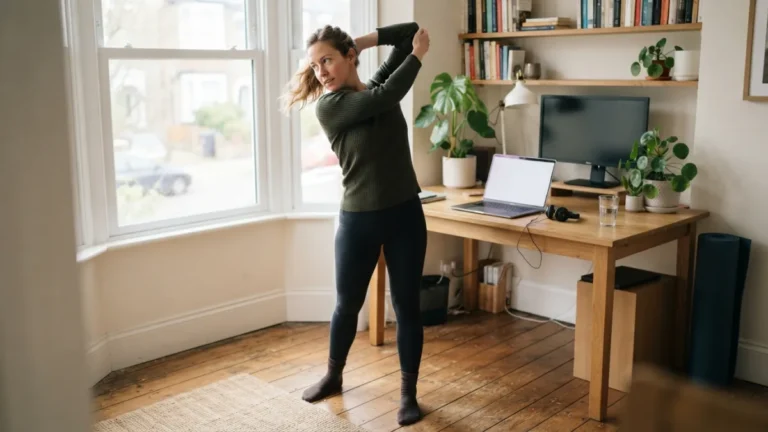
Instead of rolling out of bed and straight into your inbox, give yourself ten minutes of intentional movement before the workday begins. This could be a short walk around the block, a handful of stretches, or a few sets of bodyweight squats while your coffee brews. The goal isn’t intensity, it’s consistency. Starting your remote workday this way signals to your body that the day has officially begun, which can help separate “home mode” from “work mode.” People who skip this step often report feeling groggy well into the late morning. A simple morning ritual, even a lazy five-minute stretch session, sets a tone that carries through the rest of your schedule.
2. Set a Timer for Movement Breaks
One of the easiest fixes for a sedentary lifestyle is also the most boring sounding: set a timer. Every 45 to 60 minutes, stand up, walk to another room, or just shake out your arms and legs for two minutes. These movement breaks don’t need to be elaborate. The point is interrupting long sitting stretches before they turn into three-hour marathons. Plenty of free apps and even your phone’s built-in timer can handle this for you, so there’s no excuse for forgetting. Some people pair breaks with natural transition points, like right after finishing an email thread or wrapping up a meeting, which makes the habit feel less like an interruption and more like a natural rhythm.
3. Try Desk Exercises Between Meetings
You don’t always have time for a full break, especially on days packed with back-to-back calls. That’s where desk exercises come in handy. Seated leg raises, ankle circles, shoulder rolls, and even isometric core squeezes can be done without leaving your chair and without anyone on a video call noticing. If you have a few extra minutes, try standing calf raises next to your desk or a quick set of wall push-ups. These small bursts of activity won’t replace a proper workout, but they keep blood flowing and muscles engaged during the parts of your remote workday when stepping away simply isn’t practical. This connects closely with another common issue — see How to Structure Your Day When You Work From Home for more on that.
4. Take Your Calls on Foot
Not every meeting requires you to stare at a screen. If a call doesn’t involve a shared document or presentation, consider taking it while walking around your house, yard, or neighborhood. Walking meetings have become popular for a reason: they combine two things you already need to do, communicate and move, into a single block of time. This trick works especially well for one-on-one check-ins or phone calls that don’t need video. Some people find they think more clearly while walking, which is a nice bonus on top of the physical benefit. It’s an easy way to sneak extra steps into a day that might otherwise involve almost none.
5. Upgrade to a Standing Desk (With a Few Standing Desk Tips)
A standing desk won’t magically fix a sedentary lifestyle on its own, but it does make it easier to shift positions throughout the day. If you’re considering one, a few standing desk tips can help you avoid common mistakes. Alternate between sitting and standing rather than standing all day, since standing motionless for hours brings its own set of problems. Keep your monitor at eye level and your elbows at roughly a 90-degree angle, and consider an anti-fatigue mat if you’ll be standing for long stretches. For background on how these desks work and their history, Wikipedia’s overview of standing desks is a useful starting point. Even switching positions every hour makes a noticeable difference.
6. Turn Household Chores Into Activity Breaks
Working from home means your chores are always within arm’s reach, so why not use that to your advantage? Folding laundry, sweeping the floor, or carrying dishes to the kitchen all count as light movement, and they double as productive use of your break time. This approach is especially useful for anyone focused on work from home fitness without adding extra hours to their day. Instead of scrolling social media during a ten-minute break, try knocking out a quick household task instead. You’ll get a small physical boost, and you’ll end the day with fewer chores piled up waiting for you after you log off. You might also find our article on Signs of Remote Work Burnout (and How to Recover) helpful here.
7. End the Day With a Dedicated Workout
While scattered movement throughout the day matters, it shouldn’t fully replace a dedicated workout when possible. The CDC’s physical activity guidelines recommend adults get at least 150 minutes of moderate aerobic activity per week, along with muscle-strengthening activities twice weekly. Since remote work erases the built-in exercise that used to come from commuting, walking between meetings, or climbing office stairs, it helps to schedule a proper workout the same way you’d schedule a meeting. Whether that’s a run, a home workout video, or a bike ride, treating it as a non-negotiable part of your day makes it far more likely to actually happen once your remote workday wraps up.
Making Movement Part of Your Remote Workday Routine
None of these strategies require drastic lifestyle changes or expensive equipment. The real key is consistency: picking two or three of these habits and sticking with them long enough that they stop feeling like extra effort. A remote workday built around small, regular movement will leave you feeling less stiff, more focused, and generally better by the time you close your laptop. Start small, be patient with yourself, and adjust as you figure out what actually fits your schedule and energy levels. Over time, these little habits add up to a workday that supports your body instead of working against it.
Frequently Asked Questions
How often should I take movement breaks during a remote workday?
Aim for a short break every 45 to 60 minutes. Even two or three minutes of standing, stretching, or walking can help offset the effects of long sitting periods. For a related walkthrough, check out How to "Leave the Office" When You Work From Home.
Do desk exercises actually make a difference if I sit most of the day?
Yes, though they work best alongside other movement habits. Desk exercises keep blood flowing and reduce stiffness, but they shouldn’t be your only source of physical activity during the week.
Is a standing desk worth buying for remote work?
A standing desk can help you avoid staying in one position for hours, which is useful for anyone dealing with a sedentary lifestyle. Just remember to alternate between sitting and standing rather than standing constantly.
What’s an easy way to start building more movement into my day?
Start with one habit, like a timer for hourly breaks or a short morning stretch routine. Once that feels automatic, add another habit rather than trying to overhaul your whole routine at once.
Can household chores really count as exercise during work hours?
Light chores like sweeping, tidying, or carrying laundry do involve movement and can help break up long stretches of sitting. They’re not a replacement for structured exercise, but they’re a useful addition to a remote workday.