How to “Leave the Office” When You Work From Home
The commute used to do the hard work for you. That fifteen-minute drive or subway ride home gave your brain a clear signal that the workday was over. Now that so many of us work from a spare bedroom or a corner of the kitchen, it’s much harder to leave the office, because the office never really goes anywhere. If you’ve found yourself answering emails at 9 p.m. or feeling guilty every time you close your laptop, you’re not imagining things. Remote work removes the physical cues that once separated “on” from “off,” and without a plan, that blurry line can quietly eat into your evenings, weekends, and mental health.
Why It’s So Hard to Leave the Office When Home Is the Office
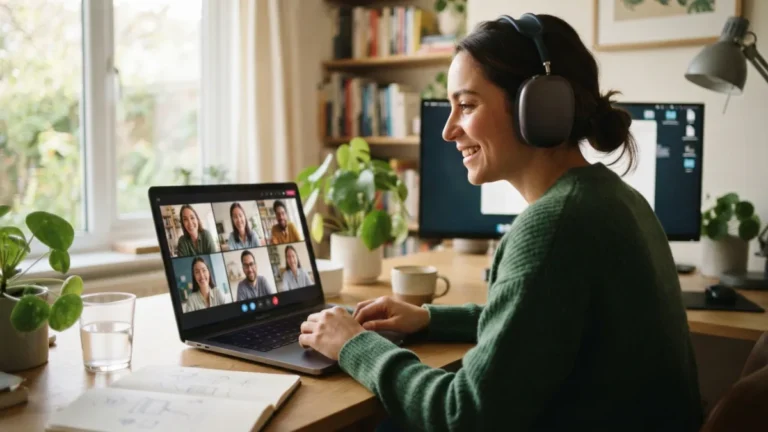
When your desk sits ten feet from your couch, your brain doesn’t get the usual signals that tell it a transition is happening. Offices are full of natural markers: badge scanners, elevator rides, coworkers saying goodnight. At home, none of that exists unless you build it yourself. Studies on remote work consistently point to the same issue: people who work from home often report working longer hours, not shorter ones, because the boundary between personal time and work time has essentially dissolved. Add in the guilt many remote employees feel about being “less visible” than office-based colleagues, and you get a recipe for constantly checking Slack messages during dinner. Recognizing this pattern is the first step. The second step is building actual habits that replace the commute you lost. If you want to dig deeper, our guide on How to Avoid Meeting Overload When Working Remotely covers this in more detail.
Create a Physical Shutdown Ritual
One of the simplest ways to leave the office mentally, even when you can’t leave it physically, is to create a small ritual that marks the end of your workday. This doesn’t need to be elaborate. Some people close their laptop and physically put it in a drawer. Others write a short list of tomorrow’s priorities before shutting everything down, which helps quiet the nagging feeling that something might be forgotten. The specific action matters less than the consistency of doing it every single day. Your brain learns through repetition, so a five-minute ritual repeated daily becomes a genuine psychological cue over time. Think of it as building your own version of the commute, minus the traffic.
Ideas for a Simple End-of-Day Ritual
- Shut down your computer completely instead of just closing the lid
- Write tomorrow’s top three tasks on a sticky note
- Tidy your desk so it looks “closed” rather than mid-task
- Say a phrase out loud, like “That’s it for today,” to signal closure
- Turn off your monitor and unplug your headset
Set a Firm End Time and Protect It
Work from home boundaries fall apart fastest when there’s no defined stopping point. If your schedule says you finish at 5:30 but you regularly work until 7, your brain stops trusting that 5:30 means anything. Pick a realistic end time based on your actual workload and communicate it to your manager and teammates so expectations are clear. Then treat that time the way you’d treat a train you can’t miss. Block your calendar if that helps, or set a recurring alarm that acts as your personal “last call.” Work-life balance remote setups depend heavily on this kind of self-imposed discipline, since no manager is walking around turning off lights at the end of the day. You have to be your own office closer.
Design Your Home Office Setup to Support Boundaries
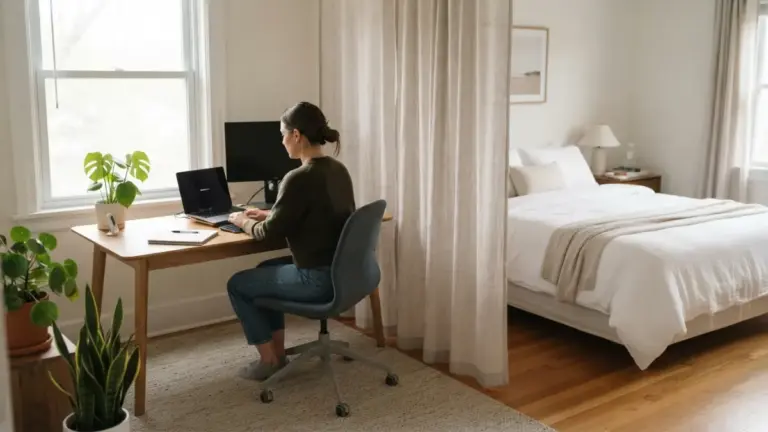
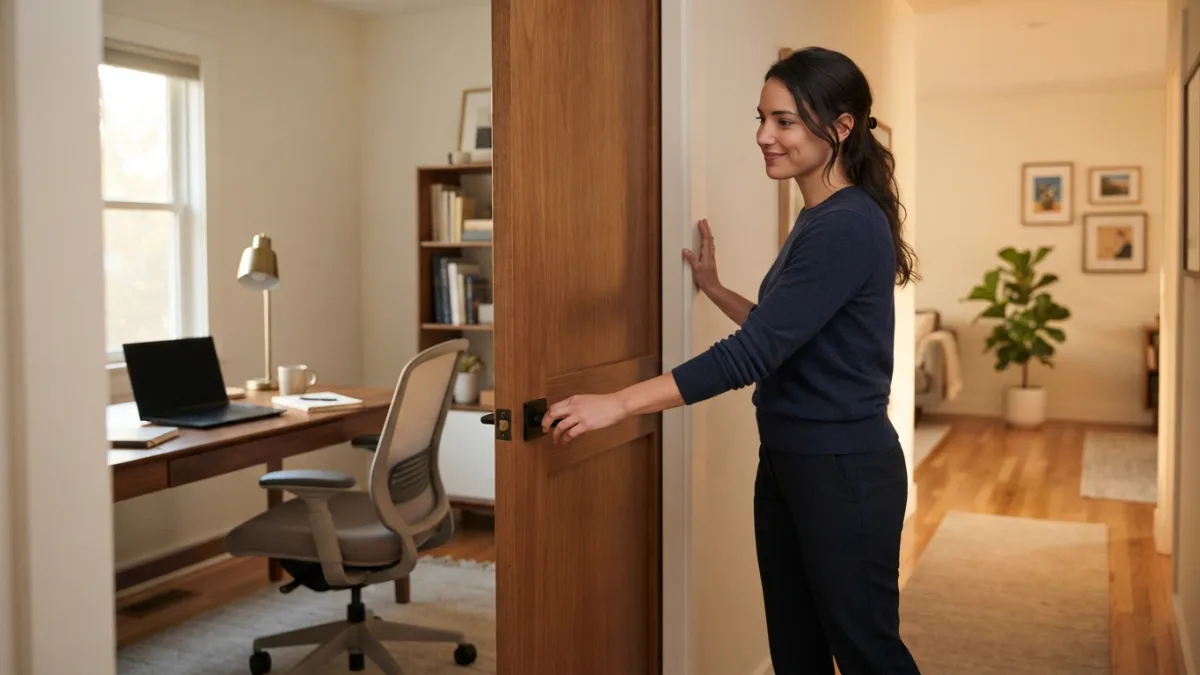
Your physical environment plays a bigger role in this than most people expect. A well-planned home office setup isn’t just about ergonomics or good lighting, though those matter too. It’s about creating a space that has a clear “off” switch. If possible, work in a room with a door you can close at the end of the day, physically separating your workspace from your living space. If you don’t have a spare room, even a curtain, a folding screen, or simply turning your desk to face a wall can create psychological separation. Some remote workers find it helpful to store work materials in a box or bag that gets put away every evening, so the kitchen table can go back to being a kitchen table. This connects closely with another common issue — see The Perfect Morning Routine for Remote Workers (Step-by-Step) for more on that.
Use Technology to Actually Disconnect
Notifications are one of the biggest reasons people struggle to leave the office after hours. A single buzz from Slack or email can pull you right back into work mode even when you had every intention of stopping. Most phones and laptops now let you schedule “do not disturb” hours, so use that feature aggressively during evenings and weekends. Consider removing work email and chat apps from your phone entirely, or at least logging out after hours so a quick check requires actual effort. If your job allows it, set an auto-responder that kicks in after your end time, letting people know you’ll reply the next business day. This small technical boundary sends a clear signal, both to colleagues and to yourself, that the workday has genuinely ended.
Change Your Clothes, Change Your Mindset
It sounds almost too simple, but changing out of your work clothes at the end of the day can genuinely help you leave the office mentally. Clothing acts as a psychological trigger, and plenty of remote workers report feeling more “done” once they swap a button-down or blazer for something more relaxed. You don’t need a strict dress code to make this work. Even changing from “focused” clothes to “comfortable” clothes creates a noticeable shift in mindset. The same idea applies to your workspace lighting or background music. Switching from bright task lighting to warmer lamps, or from silence to a favorite playlist, can help your brain register that the tone of the day has changed.
Build an Ending-the-Workday Routine That Fits Your Life
An ending-the-workday routine works best when it’s tailored to what actually helps you unwind, rather than copied from someone else’s schedule. Some people go for a short walk immediately after logging off, essentially recreating the “reverse commute.” Others use the first thirty minutes after work for something physical, like exercise or cooking, because it pulls attention away from screens entirely. Parents picking kids up from school often find that the transition happens naturally, though it helps to consciously acknowledge the shift rather than just diving into household tasks. The goal isn’t to follow a rigid formula. It’s to give your brain a repeatable signal, done consistently enough that it becomes automatic rather than something you have to think about every day. You might also find our article on Best Free Productivity Apps for Remote Workers helpful here.
Communicate Boundaries With Household Members and Colleagues
Leaving the office is much harder when the people around you don’t know you’re trying to do it. If you live with family, roommates, or a partner, let them know your working hours and your “done for the day” time, so they understand when you’re available and when you’re not. The same goes for coworkers and managers. A quick message like “I’m logging off for the day, back online at 9 tomorrow” sets expectations without sounding rigid or unfriendly. Many remote teams actually appreciate this kind of clarity, since it models healthy behavior for everyone else too. Boundaries that exist only in your head rarely hold up under pressure, but boundaries you’ve actually spoken out loud tend to stick.
Get Outside Before or After Work
Fresh air does more for the leaving-work transition than most people give it credit for. A short walk before you start your day can mimic the mental warm-up of a commute, while a walk right after you finish helps close the loop. Natural light exposure has a real effect on mood and alertness, and stepping outside physically removes you from the space where you’ve been working all day. Even ten minutes on a porch or balcony can interrupt the mental loop of replaying unfinished tasks. If your schedule allows, try running an errand right after your end time, like picking up groceries or walking the dog. The simple act of leaving the house, even briefly, reinforces the idea that the workday is genuinely over.
None of these strategies work perfectly on their own, but combined, they rebuild the structure that offices used to provide automatically. The goal isn’t to be rigid or to treat every evening like a countdown timer. It’s to protect the parts of your life that have nothing to do with your job, so remote work actually delivers on its promise of flexibility rather than quietly stealing your evenings. Give yourself permission to experiment with a few of these habits and drop the ones that don’t stick. Over time, a handful of small, consistent signals can do exactly what a commute once did, helping you leave the office even when your office never truly leaves your house. For a related walkthrough, check out How to Set Up a Home Office in a Small Apartment.
Frequently Asked Questions
Why is it so hard to leave the office when I work from home?
Without a commute or physical separation from your workspace, your brain doesn’t get the usual cues that signal the workday is over. This often leads remote workers to keep checking messages or finishing tasks well past their intended end time.
What’s the fastest way to build work from home boundaries?
Setting a firm end time and communicating it clearly to coworkers and family tends to work fastest. Pairing that time with a simple shutdown ritual, like closing your laptop and tidying your desk, reinforces the boundary quickly.
Does my home office setup really affect my ability to disconnect?
Yes. A dedicated space with a door, screen, or even a desk that faces away from your living area makes it easier to mentally and physically step away at the end of the day compared to working from a shared space like your bed or couch.
How can I stop checking work messages after hours?
Turn off notifications during evenings and weekends, remove work apps from your phone if possible, and consider setting an auto-responder. Reducing easy access to work communication removes the temptation to “just check one thing.”
Is it normal to feel guilty about ending work on time when remote?
It’s a common feeling among remote employees who worry about appearing less productive than in-office colleagues. Clear communication about your hours, along with consistent output during work time, usually helps ease that guilt over time.