How to Set Up a Home Office in a Small Apartment
Living in a small apartment doesn’t mean you have to give up on having a dedicated workspace. A well-planned small apartment home office can fit into a corner, a closet, or even a hallway nook, as long as you approach the layout with a bit of creativity. Millions of people now work from home at least part of the week, and squeezing a functional desk setup into a studio or one-bedroom apartment has become a common challenge. The good news is that limited square footage often forces better design decisions than a spare room ever would. With the right furniture, lighting, and organization habits, you can build a workspace that feels professional, calm, and completely your own.
Why a Small Apartment Home Office Actually Works Better Than You Think
People assume a cramped apartment can’t support a real office, but constraints often lead to smarter choices. When you only have a few square feet to work with, you naturally avoid clutter and stick to items you actually use every day. A small apartment home office also tends to be more energy-efficient to light and heat, and it’s easier to keep tidy since there simply isn’t room for piles of paperwork or unused equipment. Many remote workers also find that a compact setup helps them mentally separate work from rest, since everything is intentional and within reach. Instead of viewing limited space as a drawback, treat it as a design filter that pushes you toward function over excess. If you want to dig deeper, our guide on The Perfect Morning Routine for Remote Workers (Step-by-Step) covers this in more detail.
Finding the Right Spot in Your Apartment
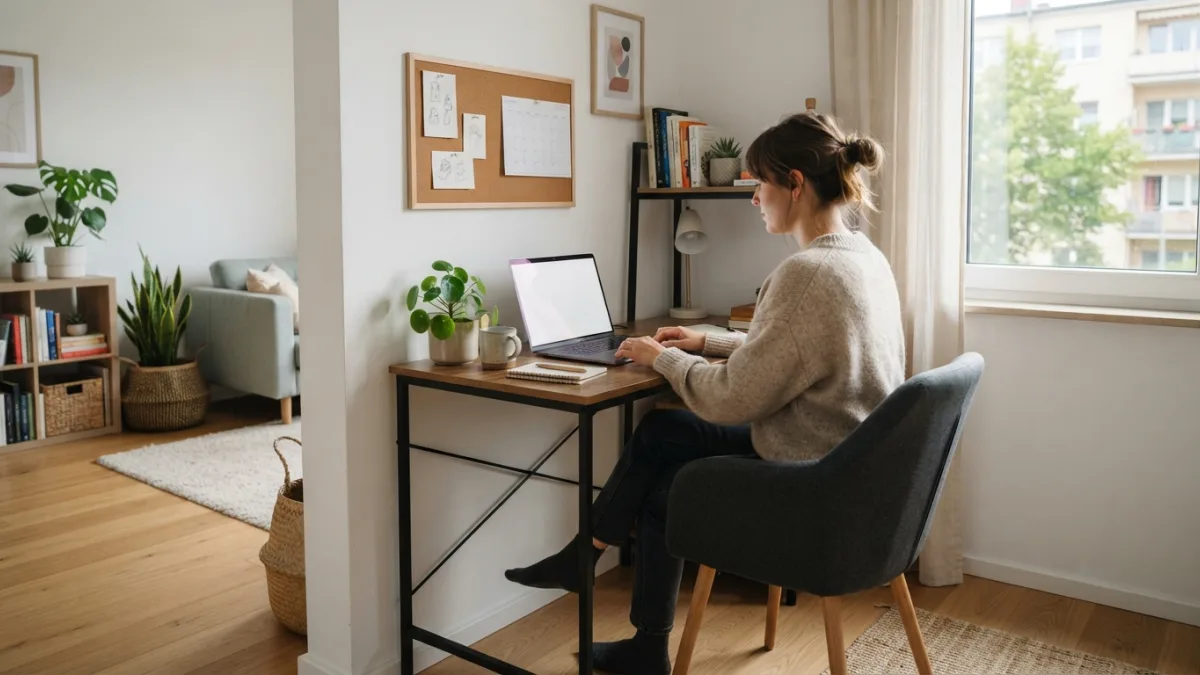
The first step in any small space office design is scouting your apartment for underused areas. Look beyond the obvious living room corner and consider spots you might be ignoring entirely.
Closets and Alcoves
A deep closet with the doors removed can become a surprisingly effective “cloffice.” Add a slim desk, a wall-mounted shelf, and a chair that tucks in completely, and you have a workspace that disappears when you’re done for the day. This setup works especially well in studio apartments where visual separation between work and living areas matters.
Room Dividers and Curtains
If you don’t have a closet to spare, a bookshelf, folding screen, or simple curtain can visually divide a bedroom or living room without requiring any construction. This trick gives your brain a cue that you’ve entered “work mode,” even if the space is only a few feet from your couch.
Compact Desk Ideas for Tight Spaces
Choosing the right desk is probably the single most important decision in setting up a small apartment home office. A bulky executive desk will overwhelm a tiny room, while the wrong compact option might not hold up to daily use. Consider these options based on your layout and needs:
- Wall-mounted folding desks that fold flat against the wall when not in use, ideal for studios.
- Narrow console tables that double as a desk during the day and a decor piece in the evening.
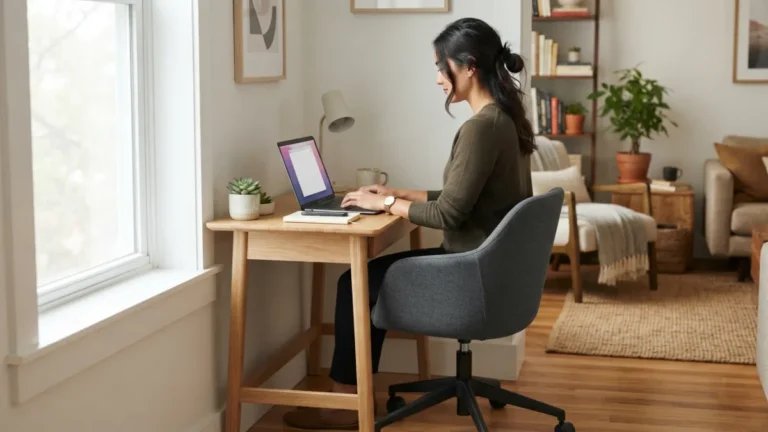
- Corner desks that make use of otherwise wasted space where two walls meet.
- Ladder desks with open shelving above, combining storage and workspace in one slim footprint.
Measure your space carefully before buying, and always leave at least a few inches of clearance for your chair to slide in and out comfortably.
Storage Solutions That Don’t Eat Up Floor Space
Once your desk is in place, storage becomes the next puzzle to solve. Floor space is precious in a small apartment, so look up instead of out. Floating shelves above the desk can hold books, files, and small plants without taking up any usable floor area. Pegboards are another flexible option, letting you hang notebooks, cords, and office supplies in a way that’s easy to rearrange as your needs change. Under-desk storage bins, rolling carts, and slim filing cabinets on wheels are also worth considering since they can be tucked away or pulled out as needed. The goal isn’t to hide everything, but to make sure every item has a designated spot so your workspace doesn’t slowly creep into your living area.
Lighting and Ergonomics Matter More Than You’d Expect
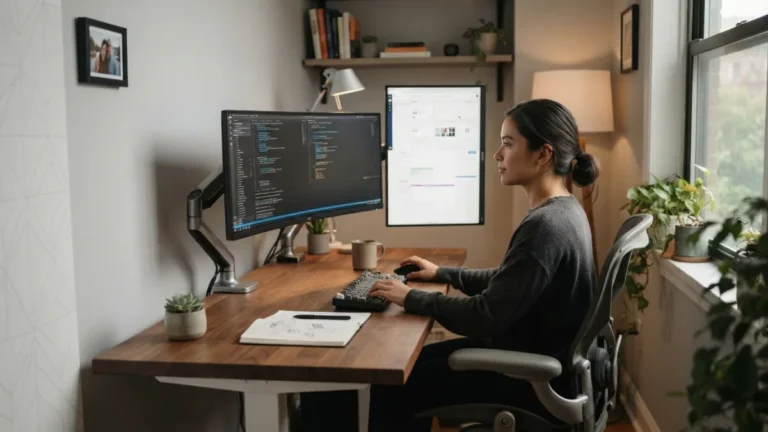
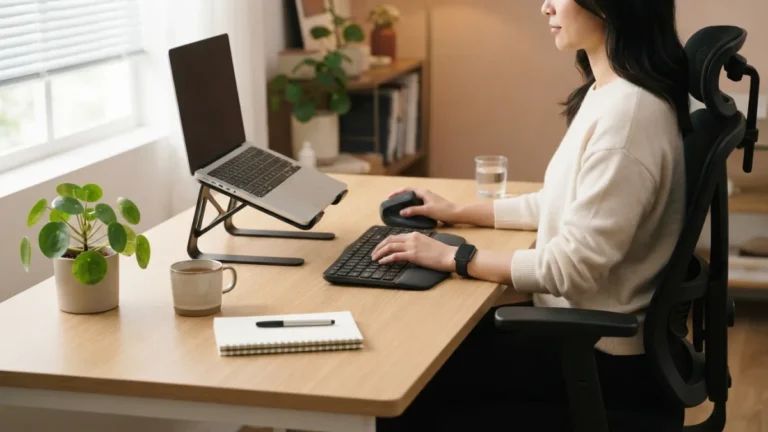
Good lighting can make a tiny workspace feel far more comfortable, especially if you’re staring at a screen for hours. Position your desk near a window if possible, since natural light reduces eye strain and generally boosts mood during long work sessions. When natural light isn’t available, a desk lamp with adjustable brightness works better than relying on a single overhead fixture. Ergonomics shouldn’t be an afterthought either, even in a small setup. A chair that supports your lower back, a monitor at eye level, and a keyboard positioned so your wrists stay neutral will save you from aches that build up over weeks of poor posture. These small adjustments cost little but pay off enormously in daily comfort.
Apartment Office Decor That Feels Personal, Not Cluttered
A workspace doesn’t have to look sterile just because it’s small. Thoughtful apartment office decor can make the area feel inviting without adding visual noise. A single piece of art, a small plant, or a woven basket for cables can add warmth without competing for space. Choose a color palette that flows with the rest of your apartment so the office corner doesn’t feel like an awkward add-on. Mirrors are another useful trick, since they reflect light and make a compact area feel larger than it actually is. Keep decorative items to a minimum and rotate them occasionally if you want variety, rather than layering on more objects than the space can comfortably hold. This connects closely with another common issue — see Hello world! for more on that.
Managing Noise and Distractions in a Work From Home Setup
Apartments often come with thin walls, noisy neighbors, and street sounds that can derail focus during calls or deep work. A few practical fixes can make a real difference in any work from home setup. Thick curtains and area rugs absorb sound and reduce echo, which matters more in smaller rooms where noise bounces around easily. Noise-canceling headphones are a worthwhile investment if you can’t control outside sounds directly. Positioning your desk away from shared walls, when possible, also helps cut down on distractions from neighbors. If your building allows it, a small white noise machine can mask background chatter without adding much bulk to your setup. These small changes add up to noticeably better concentration throughout the workday.
Comparing Popular Small-Space Desk Options
Since desk choice affects nearly every other decision in your setup, it helps to compare a few common options side by side before committing.
| Desk Type | Best For | Space Saved | Approximate Cost |
|---|---|---|---|
| Wall-mounted folding desk | Studios and tiny rooms | High | $50–$150 |
| Corner desk | Unused wall corners | Medium | $80–$250 |
| Ladder desk with shelves | Combining storage and desk space | Medium | $100–$300 |
| Console table | Flexible day-to-night use | Low to Medium | $70–$200 |
Prices vary depending on materials and brand, so treat these as general starting points rather than fixed figures.
Setting up a small apartment home office really comes down to a handful of decisions made carefully: pick a spot, choose a desk that fits your actual space, add vertical storage, and layer in lighting and decor that make the area feel like yours. None of this requires a large budget or a major renovation. It’s mostly about being deliberate with what you keep in the space and resisting the urge to add furniture just because you have a gap to fill. Once your setup is in place, you’ll likely find that a compact, well-organized office corner supports focus just as well as a full spare room would, and sometimes even better, since everything you need is always within arm’s reach.
Frequently Asked Questions
How much space do I actually need for a home office in a small apartment?
You can build a functional setup in as little as 15 to 20 square feet, especially with a wall-mounted or corner desk. What matters more than total square footage is having enough clearance for your chair and a comfortable line of sight to your screen.
What’s the best desk for a studio apartment?
Wall-mounted folding desks tend to work best in studios since they fold away completely when not in use, freeing up the room for other activities like sleeping or entertaining guests.
How do I keep my apartment from feeling like an office all the time?
Use room dividers, curtains, or furniture placement to visually separate your workspace from the rest of the apartment. Closing a laptop, tucking away supplies, and folding up a desk at the end of the day also help create a mental boundary between work and home life.
Do I need natural light for my home office setup?
Natural light isn’t required, but it does help reduce eye strain and can improve focus during the day. If your space lacks windows, a good desk lamp with adjustable brightness is a solid substitute.
How can I reduce noise from neighbors while working from home?
Thick curtains, rugs, and noise-canceling headphones can all help absorb or block outside sound. Positioning your desk away from shared walls also reduces how much noise travels into your workspace.