Work Home Boundaries: 7 Simple Steps for Bedroom Desks
Your alarm goes off, you roll over, and the first thing you see is the laptop that kept you up until 11 p.m. If that sounds familiar, you already know why work home boundaries are so hard to hold when your desk sits three steps from your pillow. Millions of people now run a full career out of a corner of the room where they are supposed to rest. The room does not care that you have two jobs to do — sleeping and earning — so you have to teach it.
The good news: you do not need a bigger apartment or a separate office door. You need signals. Small, repeatable cues that tell your brain “this is work time” and later, just as clearly, “this is over.” Below are seven practical steps that make a bedroom home office feel like two separate places, even when it is only one. If you want to dig deeper, our guide on How to "Leave the Office" When You Work From Home covers this in more detail.
Why Work Home Boundaries Matter More in a Bedroom
Psychologists talk about context: our brains link places to behaviors. A kitchen means eating, a gym means effort, a bedroom means switching off. When you push a desk against the wall by the bed, those links blur. Work thoughts follow you under the blanket, and sleepiness follows you into meetings. Sleep experts often recommend keeping the bed for sleep and intimacy only, a habit sometimes called stimulus control — and the CDC’s sleep health resources reflect that same basic idea of protecting your sleep environment. Strong work home boundaries are not about discipline or willpower. They are about protecting the one room that is supposed to restore you.
There is a second cost, and it is quieter. Without a clear stopping point, work expands. You answer “one last message,” then check email at midnight because the laptop is right there. Over weeks, that erodes work life balance at home and leaves you tired without ever feeling truly busy. People who set real boundaries usually work fewer hours and finish more, because the hours they do work have edges.
7 Simple Steps to Build Work Home Boundaries Around a Bedroom Desk
1. Give the Desk a Defined Zone — Even a Tiny One
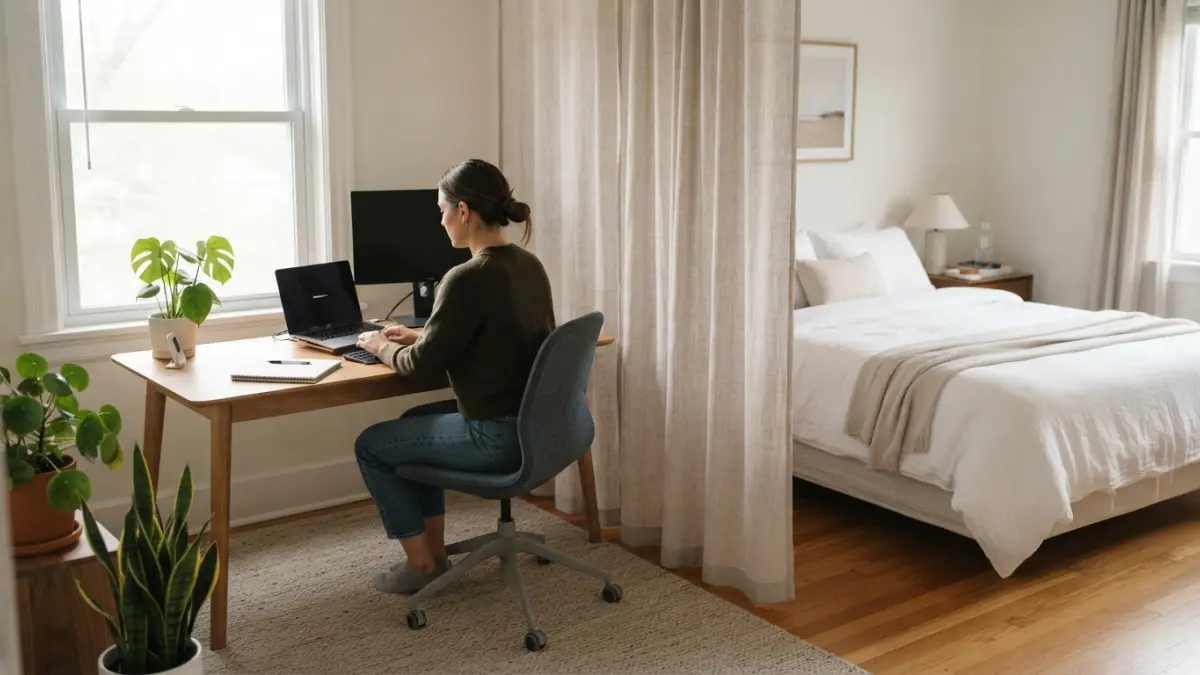
Start physically. Mark where work lives and where it does not. A rug under the desk chair, a strip of tape on the floor, a different wall color, a shelf that only holds work items — any of these turn a vague corner into a room within a room. Angle the desk so you are not staring at the bed while you type, and if possible, keep your back to it during calls. Your desk in bedroom setup should feel like a station, not like furniture that wandered in. The clearer the zone, the easier the mental switch, and the more naturally your work home boundaries hold up on stressful days.
2. Create a Fake Commute
Commutes were annoying, but they did a job: they gave your brain a transition. Rebuild that in five minutes. Walk around the block before you sit down, make coffee in a specific mug, listen to one podcast episode, or change out of the clothes you slept in. Then repeat something similar at the end of the day — a walk, a shower, a short stretch. The activity matters less than the consistency. Do the same small ritual for two weeks and it becomes a switch. This is the cheapest boundary tool there is, and for most remote workers it is the one that changes the day most. This connects closely with another common issue — see How to Stay Social When You Work From Home Full-Time for more on that.
3. Let Light Do the Talking
Light is a powerful signal, and it costs nothing to use. During work hours, open the curtains fully and use a bright, cool task lamp aimed at your desk. When the workday ends, turn that lamp off and switch to a warm, low bedside light. The room physically changes character. Bright light in the morning also supports your body clock, which helps you fall asleep later. If your only window is behind the bed, consider a separate lamp that you use exclusively for work — one flick of the switch becomes a start and stop button for your remote work routine.
4. Build a Shutdown Ritual You Actually Finish
Ending work needs more ceremony than starting it. Give yourself a fixed closing sequence: write tomorrow’s top three tasks, close every tab, log out of chat, put the laptop in a drawer or a bag, and say something out loud like “done for today.” Silly? Maybe. It works anyway, because it gives your mind permission to stop tracking unfinished business. If you use a time method like the Pomodoro Technique, treat your last block as an official wrap-up. Clear endings are the backbone of solid work home boundaries in a shared space.
5. Set Digital Boundaries, Not Just Physical Ones
The desk is only half the problem. Your phone carries the office into bed. Take the obvious steps and take them seriously:
- Remove work email and chat apps from your phone, or log out after hours.
- Turn off notifications from work tools between your stop and start times.
- Use a separate browser profile or user account for work.
- Set a status message with your actual working hours.
- Charge your phone outside the bedroom, or at least across the room.
Each step removes a temptation instead of relying on self-control at 10 p.m. That distinction matters. Digital work home boundaries fail when they depend on how tired you are. You might also find our article on Building Movement Into Your Remote Workday helpful here.
6. Keep the Bed Out of the Office
Working from bed feels lovely for about twenty minutes. Then your neck hurts, your focus drops, and your brain starts associating the mattress with deadlines. Sit at the desk with your screen near eye level, feet flat, and elbows at roughly a right angle — the OSHA computer workstations guide lays out the basics well. If you are sick or exhausted, use a chair somewhere else in the home instead. Protecting the bed is the single most important rule in a bedroom home office, because sleep is what makes the next workday possible.
7. Tell Other People Where the Line Is
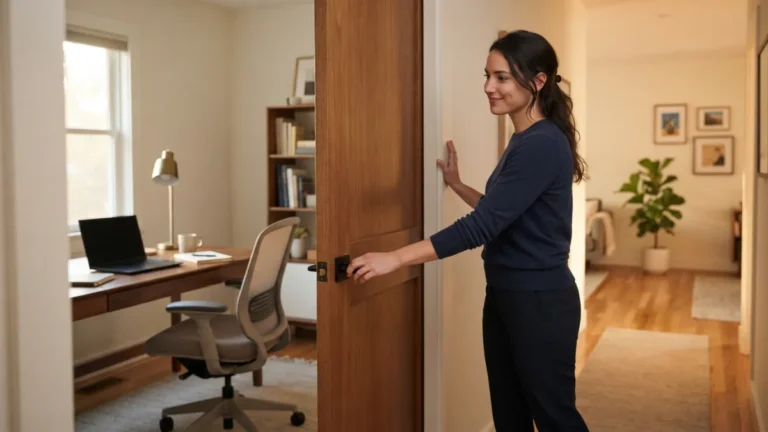
Boundaries that live only in your head get crossed constantly. Tell your manager and teammates your working hours and stick to them for long enough that people believe you. Tell the people you live with what a closed laptop means, and what a headset on your head means. If you share the bedroom, agree on quiet hours and call schedules in advance rather than negotiating each morning. Saying it out loud turns a private intention into a shared rule — and shared rules survive busy weeks far better than personal ones.
Choosing a Divider for a Small Space Workspace
Many people find that a visual barrier between desk and bed does more than any app. Here is a quick comparison of common options for a small space workspace.
| Option | Cost | Best for | Drawback |
|---|---|---|---|
| Ceiling-track curtain | Low to medium | Fully hiding the bed during calls | Needs drilling; not ideal for some rentals |
| Folding screen | Low | Renters who want flexibility | Takes floor space; can tip over |
| Open bookshelf | Medium | Dividing plus storage | Heavy; blocks some light |
| Desk-mounted panel | Low | Very tight corners | Only hides the background, not the room |
When the Boundaries Slip, Reset Fast
Some weeks fall apart. A deadline lands, you work from the duvet for three nights, and suddenly the whole system is gone. That is normal — treat it as a bad week, not a failed plan. Reset with one visible action: clear the desk completely, change the sheets, and do your full shutdown ritual the next evening even if work is not finished. One clean ending is usually enough to restart the habit. Over time, the routine gets stronger than the exceptions, and your work home boundaries start rebuilding themselves without much thought. For a related walkthrough, check out Signs of Remote Work Burnout (and How to Recover).
A desk in the bedroom is not a compromise you should feel bad about. It is how a huge share of the world now works, and with a few signals — light, distance, rituals, and clear communication — one room can serve two very different purposes. Give yourself a month with these steps before judging them. The goal is simple: when you sit down, you work; when you stand up, you are home.
Frequently Asked Questions
Is it bad to have a desk in the bedroom?
Not automatically. It becomes a problem when work and sleep blend together — when you answer emails in bed or lie awake thinking about tasks. A defined desk zone, a shutdown ritual, and a rule against working from the mattress usually solve most of it.
How do I stop thinking about work at night?
Write down tomorrow’s tasks before you close the laptop, so your brain stops trying to remember them. Then put the work device out of sight, dim the lights, and do a short non-screen activity. The physical act of hiding the laptop matters more than people expect.
What if my bedroom is too small for a separate work zone?
Use signals instead of space. A desk lamp used only during work hours, a specific chair cushion, a folding screen, or even a tray that holds your work items and gets stored away at night can all mark the difference. Small space workspace boundaries are about contrast, not square meters.
How long does it take for these habits to stick?
Most people notice a difference within one to two weeks, as long as the routine stays consistent. The transition rituals — the fake commute and the shutdown — tend to work fastest because they repeat every single day.
Should I work from bed if I am tired or unwell?
Try to avoid it. If you genuinely cannot sit at the desk, move to a sofa or kitchen chair instead, and keep the bed reserved for rest. If you are too unwell to sit up, the honest answer is that you are too unwell to work.