Small Home Office Ideas for Remote Workers in Studio Apartments
If you have ever tried to answer a work call while your dinner simmers three feet away, you already know the struggle of working from a studio apartment. Finding small home office ideas that actually fit into 400 or 500 square feet takes creativity, but it is far from impossible. With the right furniture choices and a bit of planning, you can carve out a workspace that feels separate from your living area, even when there are no walls to divide them.
Remote work is not going away anytime soon, and neither is the challenge of setting up a functional home office setup in a small footprint. According to background on studio apartments, these units combine sleeping, living, and cooking spaces into one open room, which means every piece of furniture has to earn its place. Below are seven practical setups that turn a corner, a closet, or even a windowsill into a real place to get things done. If you want to dig deeper, our guide on How to Set Up a Home Office in a Small Apartment covers this in more detail.
1. Turn a Closet Into a Micro Office
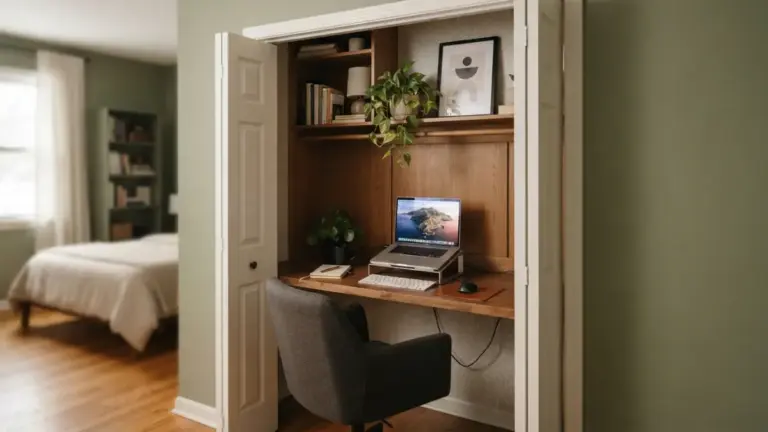
One of the smartest small home office ideas for a studio apartment is repurposing a closet you rarely use. Pull out the clothing rod, add a slim desktop shelf, and mount a small light fixture inside. This “cloffice” setup hides your entire workspace behind a door when the day ends, which matters a lot if you host guests or simply want your evenings to feel work-free. Add a power strip along the back wall so your laptop, monitor, and charger cables stay tucked away and out of sight. Even a shallow closet, around 24 inches deep, can hold a compact desk surface and a stool that slides in when not needed.
Why a Closet Office Works So Well
A closet office solves the biggest problem of studio living: the lack of a door to separate work from rest. Closing that door at 6 p.m. creates a psychological boundary that a desk sitting in the open living room simply cannot offer. It also protects your sightlines, since visitors or roommates won’t see stacks of paperwork or a tangle of cords the moment they walk in. If you rent, this setup is usually reversible too, since most changes involve removable shelving rather than permanent construction. Just make sure there is enough ventilation and light, since closets were not originally designed for hours of screen time.
2. Choose a Wall-Mounted Fold-Down Desk
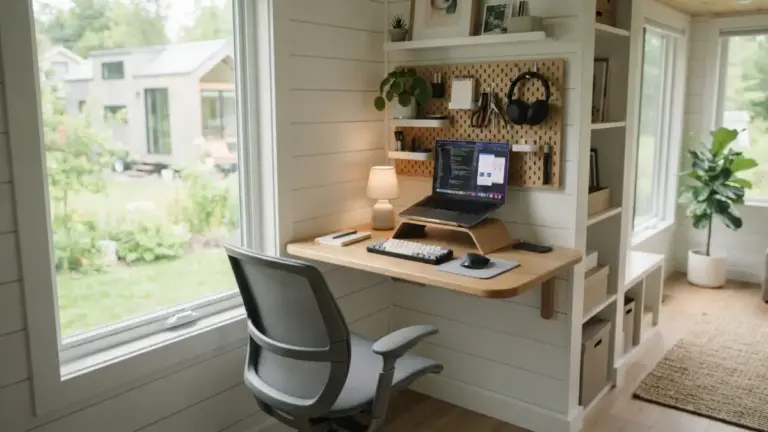
When floor space is precious, a wall-mounted fold-down desk is one of the most efficient space-saving office furniture choices available. These desks attach directly to the wall and fold flat when you are done working, freeing up the area for yoga, dinner, or simply walking through the room. Many versions include small shelves or a pegboard above the desk for notebooks, pens, and a plant. Because the desk has no legs touching the floor, cleaning underneath it is easy, and the room feels less cluttered overall. Look for a model rated to hold at least 20 to 30 pounds if you plan to keep a monitor or printer on it permanently.
3. Set Up a Room Divider Workspace
A lightweight room divider, bookshelf, or curtain can visually separate your studio apartment office from your sleeping or relaxing area without needing a full renovation. Placing a slim bookshelf perpendicular to the wall, with your desk tucked behind it, creates a sense of a separate room even though the space is technically open. Curtains on a tension rod work well too, and they can be pulled shut during video calls for a cleaner background. This trick also helps with noise, since fabric and books both absorb some sound compared to a bare wall. It’s a low-cost way to trick your brain into treating the corner as “the office” rather than just another part of the living room. This connects closely with another common issue — see Ergonomic Home Office Essentials Under 0 for more on that.
4. Invest in Compact Desk Ideas That Multitask
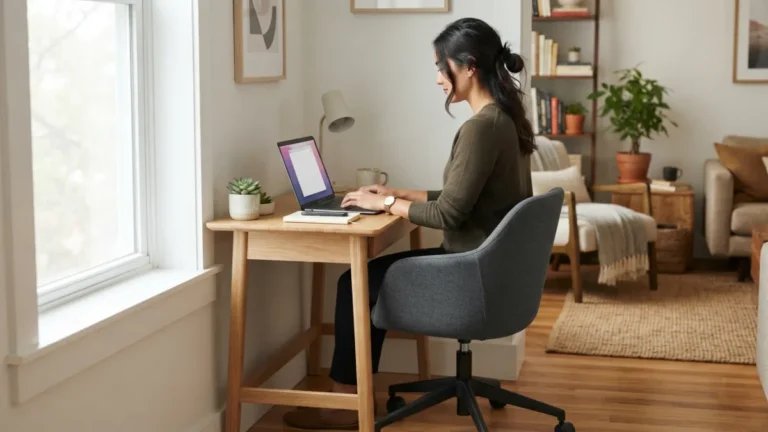
Not every desk needs to be a single-purpose piece of furniture. Some of the best compact desk ideas for tiny apartments double as a console table, a vanity, or even a nightstand extension. A narrow desk, around 30 inches wide, can sit against a wall near your bed and switch roles depending on the time of day. Look for one with at least one drawer to hide cables and office supplies when you’re not working. Round or corner-shaped desks also make better use of awkward angles than a standard rectangular model. The goal is finding a piece that feels intentional in the room’s overall design, not just functional during work hours.
Furniture That Pulls Double Duty
Beyond desks, consider a storage ottoman that serves as extra seating for calls and a place to stash office supplies at the same time. A daybed with drawers underneath can hold printer paper or a spare keyboard, keeping your desk surface clear. Floating shelves above the desk area store books and reference materials without taking up any floor space at all. When every item in a small apartment has more than one job, the whole room feels roomier and less like a cluttered mix of “home” and “office” furniture fighting for the same square footage.
5. Make the Most of Natural Light and a Window Nook
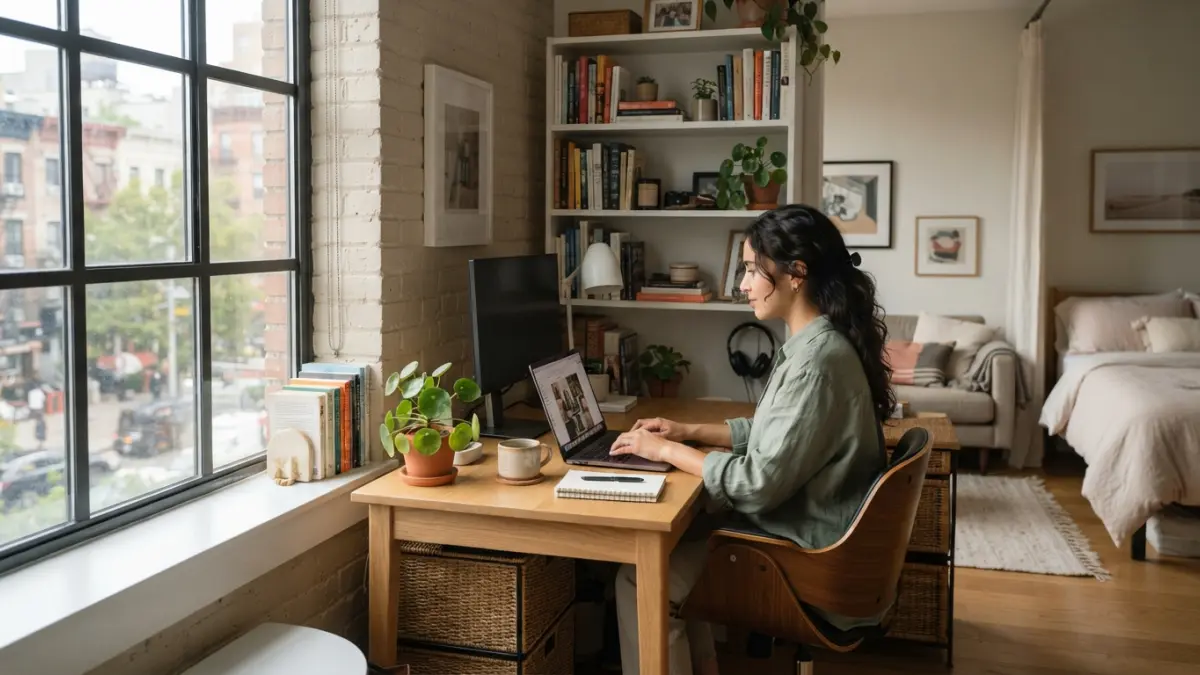
If your studio has a window with a decent sill or a corner that catches morning light, that spot is worth claiming for your desk. Working near natural light has been linked to better mood and alertness during the day, and it also cuts down on how much you rely on artificial lighting. The Cornell University ergonomics program notes that proper lighting placement can reduce eye strain and glare on computer screens, so angle your desk so the light comes from the side rather than directly behind your monitor. A small floating desk built into a window nook can turn an oddly shaped area into one of the most pleasant spots in the entire apartment to spend your workday.
6. Build a Vertical Storage Wall Behind Your Desk
When you can’t expand outward, the only direction left is up. A vertical storage wall made of stacked shelves, pegboards, or wall-mounted bins keeps papers, chargers, and supplies off your desktop and off the floor. This approach is especially useful in a studio apartment office where every surface tends to collect clutter fast. Hang a corkboard or magnetic panel for reminders instead of letting sticky notes pile up around your monitor. Baskets on floating shelves work well for items you need occasionally, like extra notebooks or backup cables, while daily tools stay within arm’s reach on a lower shelf closer to your chair. You might also find our article on Best Budget Desk Setups for Remote Workers helpful here.
7. Prioritize an Ergonomic Chair Even in Tight Quarters
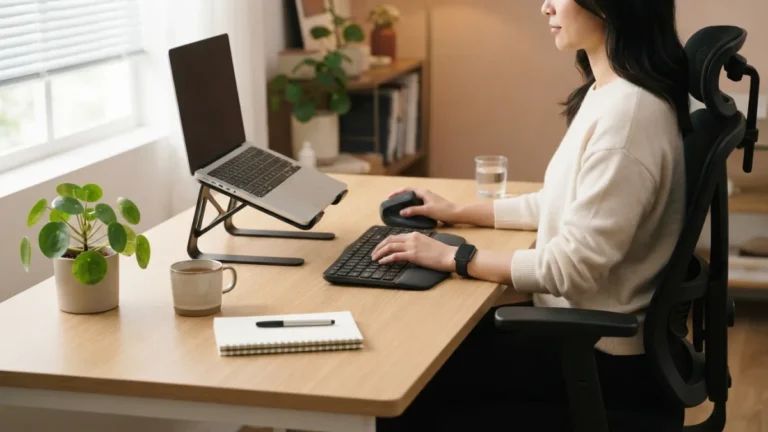
It’s tempting to skip a proper office chair when space is limited, but your back and neck will notice the difference over months of remote work. The OSHA computer workstation guidelines recommend chairs that support the lower back and allow your feet to rest flat on the floor, along with a monitor positioned at eye level to reduce neck strain. Folding chairs and dining chairs might look sleek, but they rarely offer that kind of support for a full workday. Look for a compact ergonomic chair with a smaller footprint, or one that folds flat and slides under the desk when guests come over. Comfort does not have to come at the cost of style or space in a studio setup.
Extra Work From Home Tips for Studio Living
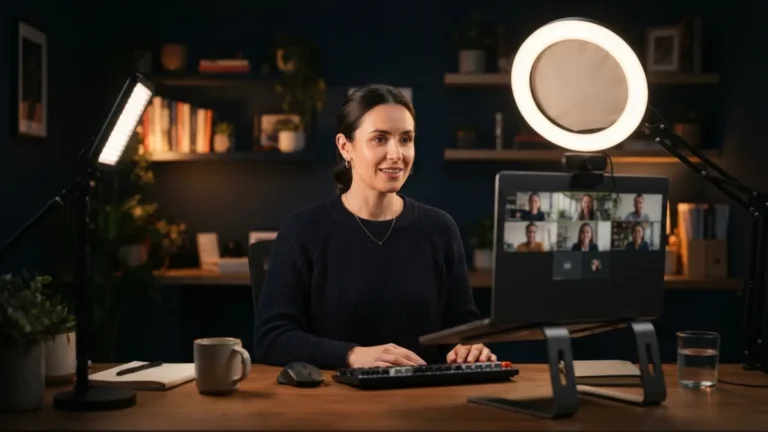
Beyond furniture and layout, a few small habits make a big difference in how a studio apartment office actually functions day to day. Keeping a consistent start and end time to your workday helps maintain the mental line between “home” and “office,” even without a physical door. Noise-canceling headphones are worth the investment if your studio faces a busy street or shares thin walls with neighbors. A small desk lamp with adjustable brightness reduces glare during video calls, especially in the evening when natural light fades. These work from home tips won’t replace a bigger apartment, but they go a long way toward making a compact space feel genuinely workable.
Setting up a functional workspace in a studio apartment is really about making intentional choices rather than fighting the size of the room. Whether you convert a closet, mount a fold-down desk, or simply claim a sunny corner by the window, the goal stays the same: create a spot that signals “work mode” the moment you sit down. Try one or two of these small home office ideas first, see how they fit your daily routine, and adjust from there. Over time, even the smallest studio can support a workspace that feels organized, comfortable, and genuinely yours.
Frequently Asked Questions
What is the best desk size for a studio apartment office?
A desk between 24 and 36 inches wide usually works well in a studio, since it fits in a corner or against a wall without dominating the room. Measure your available space first and leave at least 30 inches of clearance behind the chair so you can move freely. For a related walkthrough, check out Lighting Tips for Video Calls That Actually Work.
How can I separate my workspace without building walls?
Room dividers, bookshelves, curtains, or even a folding screen can create a visual boundary between your work area and living space. Placing your desk perpendicular to the main seating area also helps signal a distinct zone without any construction.
Is a wall-mounted desk sturdy enough for daily work?
Most wall-mounted fold-down desks are rated to hold a laptop, monitor, and basic supplies, typically between 20 and 40 pounds depending on the model. Check the weight rating and make sure it’s anchored into a wall stud for extra stability.
How do I stay focused when my office is in the same room as my bed?
Try to keep your desk out of direct view of your bed, and consider a room divider or curtain to block the sightline during work hours. Sticking to a set schedule and closing your laptop at the end of the day also helps your brain separate rest time from work time.
What lighting works best for a small home office?
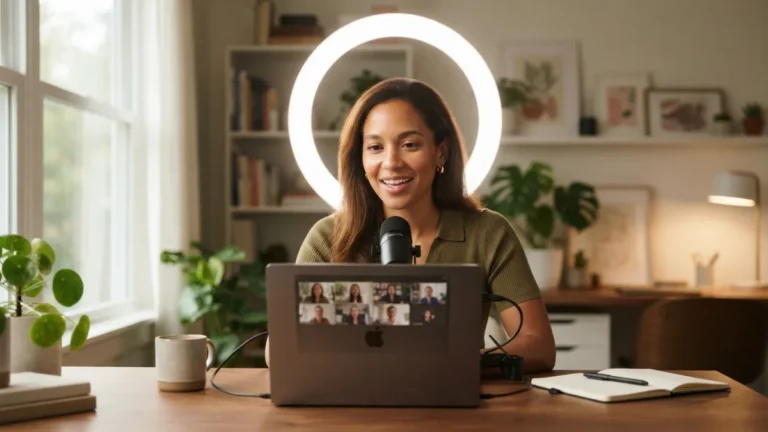
Position your desk near a window so natural light comes from the side rather than behind your screen, which reduces glare during video calls. Add a small adjustable desk lamp for evenings or overcast days to keep your eyes comfortable throughout the workday.