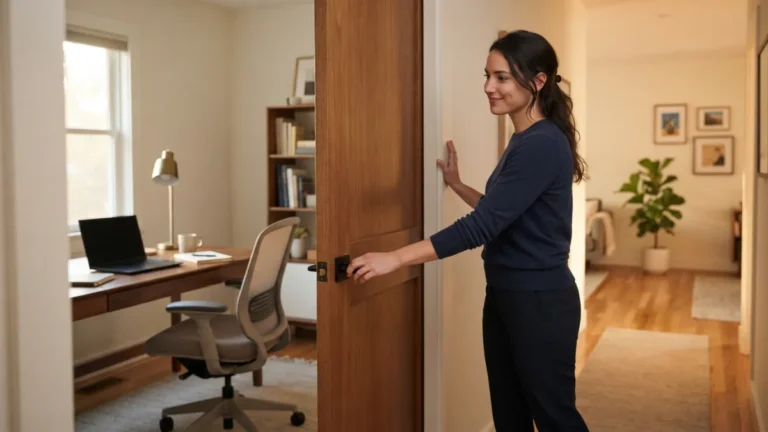
Remote Work and Sleep: 7 Easy Evening Habits to Unwind
The laptop is closed, but your brain is still answering emails. Sound familiar? If you work from home, the link between remote work and sleep can feel like a tug-of-war you lose around 11 p.m. There is no commute to mark the end of the day, no office door to walk through, and no colleagues heading for the elevator to remind you it’s time to go. Your kitchen table turns into a desk, then back into a dinner table, and your mind never quite gets the message. The good news is that small evening changes can make a real difference. This guide covers seven of them, and none needs special gear or a big budget.
Why remote work and sleep so often collide
The CDC’s sleep resources note that most adults need at least seven hours of sleep a night. Remote life can quietly chip away at that. Flexible hours sound great, but they often stretch the workday into the evening. A quick check of your inbox at 9 p.m. turns into an hour of replies. You may also get less daylight and less movement than you did with an office routine, and both can affect how easily you feel sleepy at night. Add a laptop that sits ten steps from your bed, and your body gets mixed signals about when the day is over. The habits below aim to fix that, one evening at a time. If you want to dig deeper, our guide on How to Stay Social When You Work From Home Full-Time covers this in more detail.
When work from home burnout follows you to bed
Work from home burnout rarely arrives with a warning. It builds slowly: you feel tired but wired, you skip breaks, and you reach for your phone “just to check one thing.” The World Health Organization describes burn-out as an occupational phenomenon linked to chronic workplace stress that hasn’t been well managed. Poor sleep and burnout can feed each other. You sleep badly, so you work slower, so you work later, so you sleep worse. Breaking that loop doesn’t require a dramatic life change. It starts with giving your evenings a clear edge, so your mind learns that work has a finish line. The seven habits below give you that edge.
Seven evening habits that help you actually switch off
Habit 1: Build a work shutdown routine
A work shutdown routine is a short, repeatable set of actions that tells your brain, “We’re done now.” Think of it as the commute you no longer have. Pick a stopping time and treat it like a meeting you can’t skip. Then spend ten minutes closing the day properly instead of just slamming the laptop shut. The routine can be simple, and it works best when you do it in the same order every day. Over a couple of weeks, the sequence itself starts to trigger a feeling of finishing. Here is one example you can copy or adapt:
- Review what you finished and note any loose ends.
- Write tomorrow’s top three tasks on paper.
- Close all work tabs and apps.
- Say a final phrase out loud, such as “Done for today.”
Habit 2: Draw clear home office boundaries
Strong home office boundaries protect your sleep as much as your schedule does. If you can, keep your work in one spot and keep that spot out of the bedroom. Not everyone has a spare room, so use small cues instead. Pack the laptop into a bag or a drawer at the end of the day. Cover a desk corner with a cloth. Turn off work notifications on your phone, or use a separate profile for work apps. Tell your team when you’re available, and stick to it. People tend to respect limits that are stated clearly. Your brain also learns that a space has one job, which makes it easier to relax once you leave it. This connects closely with another common issue — see How to "Leave the Office" When You Work From Home for more on that.
Habit 3: Set a caffeine cutoff time
Remote workers often lean on coffee, especially during a long afternoon slump. A caffeine cutoff time keeps that habit from stealing your night. Caffeine is a stimulant, and it can stay in your body for hours after your last cup. The exact timing varies from person to person, so treat any rule as a starting point. Many people do well by stopping around lunchtime or early afternoon. Try it for a week and see how you feel at bedtime. If you still crave something warm later, switch to herbal tea or decaf. Remember that tea, cola, energy drinks and some pain relievers can also contain caffeine, so check labels if your sleep stays restless.
Habit 4: Cut back on blue light at night
Screens are hard to avoid when your job lives on one, so aim for less blue light at night rather than none at all. Bright light in the evening can make it harder to feel sleepy, and phones, tablets and laptops all give off plenty of it. Start by switching your devices to a warm or night mode after sunset. Dim the lamps in your home too. Then pick a screen-free window before bed, even just 30 minutes. The content matters as much as the light. Scrolling through work chats or stressful news keeps your mind busy. Read a paper book, listen to music or chat with someone in the room instead.
Habit 5: Write it down so you can stop thinking about work
Many people struggle to stop thinking about work once the lights go out. Your brain keeps replaying unfinished tasks because it fears forgetting them. Give those thoughts somewhere else to live. Keep a notebook by the bed or on the sofa and spend five minutes jotting down worries, ideas and to-dos. Write each item in plain words, and add a next step where you can. For example, “Email Sam about the budget at 9 a.m.” works better than “Budget stress.” Once a thought is on paper, you can tell yourself it’s handled for now. If a worry pops up later, remind yourself that it’s already written down and will be there in the morning. You might also find our article on Remote Work Burnout: 7 Hidden Signs to Avoid Today helpful here.
Habit 6: Try evening relaxation techniques
Your body needs a way to move from work mode into rest mode, and evening relaxation techniques can help. You don’t need to meditate for an hour. Slow breathing is easy: inhale for four counts, exhale for six, and repeat for a few minutes. Gentle stretching loosens the shoulders and neck after a day at a desk. A warm shower, a short walk around the block or a few pages of a novel can also work. Try several options and keep the ones that make you feel calmer. Consistency matters more than variety. If you find yourself checking the clock or your inbox while you relax, put the phone in another room and try again.
Habit 7: Follow a bedtime routine adults can actually keep
Children get bedtime rituals, but a bedtime routine adults can follow is just as useful. Keep it short and realistic so you’ll still do it on a busy night. Go to bed and get up at roughly the same times, even on weekends, because a steady rhythm helps your body clock. Keep the bedroom cool, dark and quiet. Do the same two or three calming things in the same order, such as brushing your teeth, setting out tomorrow’s clothes and reading for a few minutes. Charge your phone across the room and use a basic alarm clock if you need one. If you can’t fall asleep after a while, get up, do something quiet, and return when you feel drowsy.
Final thoughts on remote work and sleep
You don’t have to adopt all seven habits tonight. Pick one or two that fit your life, try them for a week, and notice what changes. Maybe you fall asleep faster, or maybe you simply feel less tense at dinner. Those small wins add up. Remember that remote work and sleep don’t have to fight each other. With a clear end to the workday, a few firm limits and a calm wind-down, home can be a place where you both work well and rest well. If you’ve tried these steps for several weeks and still struggle to sleep, talk to a doctor, since ongoing sleep problems sometimes have causes that habits alone can’t fix. For a related walkthrough, check out Work Home Boundaries: 7 Simple Steps for Bedroom Desks.
FAQ: Remote Work and Sleep
Why does working from home make it harder to sleep?
Home removes the natural markers that end a workday, like a commute or leaving the office. Work can drift into the evening, and your workspace may sit close to your bed. Together, these make it harder for your mind to switch off.
How long should a work shutdown routine take?
About ten minutes is enough for most people. Review your day, write tomorrow’s priorities, close your work apps and say you’re done. What matters is repeating the same steps each day.
What if I can’t avoid screens in the evening?
Use night mode, lower the brightness and keep work tasks away from the last hour before bed. If you must use a screen, choose relaxing content and step away at least a short while before you sleep.
When should I stop drinking coffee?
There is no perfect time for everyone, but many people feel better when they stop by early afternoon. Test a cutoff for a week and see whether you fall asleep more easily.
When should I see a doctor about my sleep?
See a doctor if you have trouble sleeping for several weeks, feel very tired during the day, snore loudly or wake up gasping. Persistent sleep problems can have medical causes and deserve proper advice.