Bedroom Office Layout: 7 Best Ideas for Small Spaces
Your bed is three steps from your desk, and your brain knows it. If you work from home in a single room, a smart bedroom office layout can mean the difference between a productive day and a long slump under the duvet. The good news is that you don’t need a spare room, a big budget, or a designer. You need a plan, a tape measure, and a few clever tricks that let one room do two jobs. This guide covers seven practical ideas, from corner desks to fold-down tables, plus a few comfort details people often forget. Pick the ones that fit your space and mix them freely.
Measure First, Then Choose Your Bedroom Office Layout
Before you buy anything, grab a tape measure and map the room. Write down the length of each wall, then note where the windows, doors, and sockets are. Mark a desk-sized rectangle on the floor with painter’s tape and live with it for a day. You’ll quickly see whether it blocks a path or crowds the bed. The best bedroom office layout usually keeps walkways clear and puts the desk near both a power source and natural light. Check these points first: If you want to dig deeper, our guide on Small Home Office: 7 Best Desk Ideas to Save Space covers this in more detail.
- Wall lengths and ceiling height
- How far your doors, windows, and wardrobe open
- Where the sockets and Wi-Fi router are
- Which furniture can move and which can’t
- How much daylight each wall gets
7 Bedroom Office Layout Ideas for Small Spaces
1. Build a Small Bedroom Desk Setup in a Corner
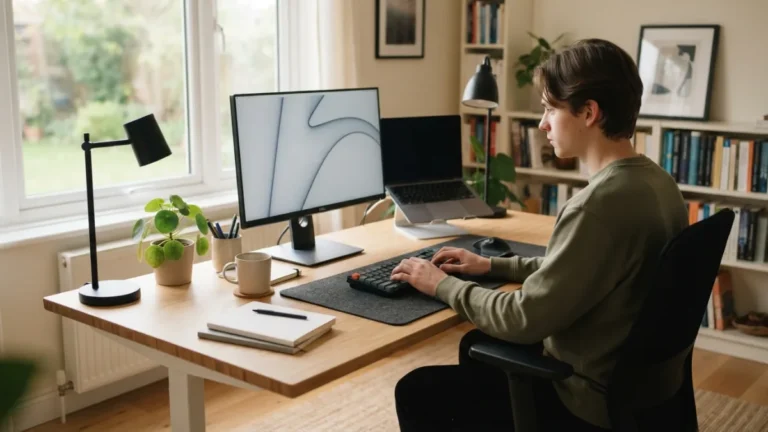
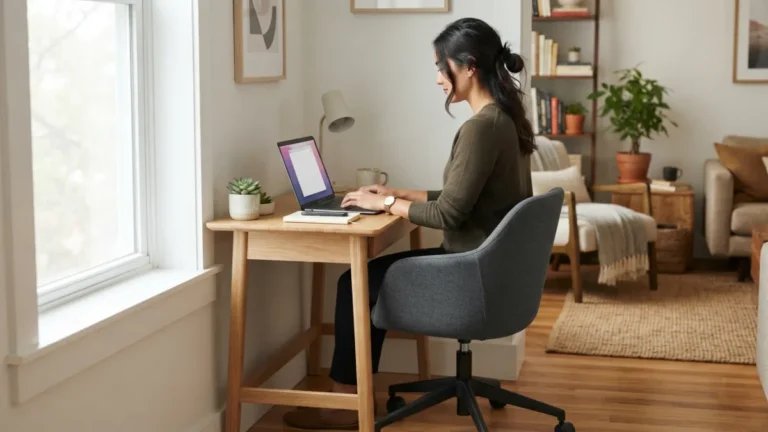
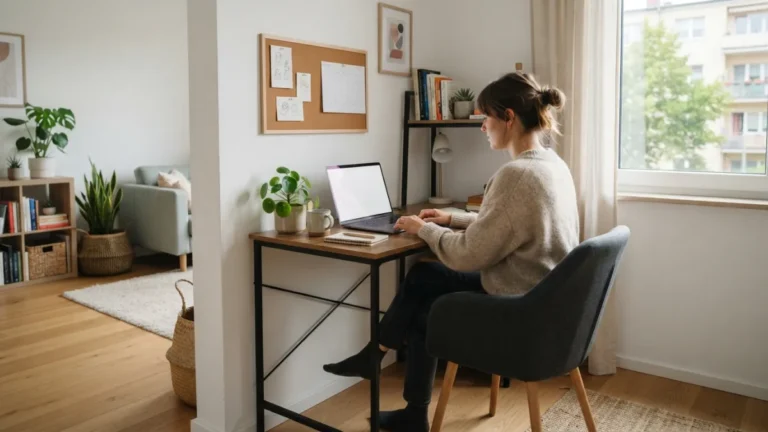
A corner is the easiest place to start. Most bedrooms have at least one that holds nothing but a pile of bags, and that spot is perfect for a small bedroom desk setup. Choose a narrow desk, or two slim tabletops that form an L, and push them tight against the walls. If a window sits nearby, even better: you get daylight for free. Keep the setup lean. A laptop, one monitor if you need it, and a small tray for pens will do. This idea also suits rented rooms, because nothing needs drilling. If the corner feels dark, a single lamp fixes that quickly.
2. Mount a Foldable Wall Mounted Desk
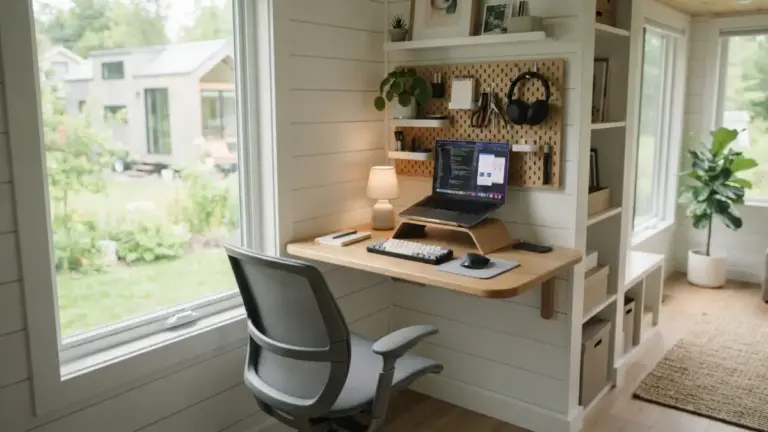
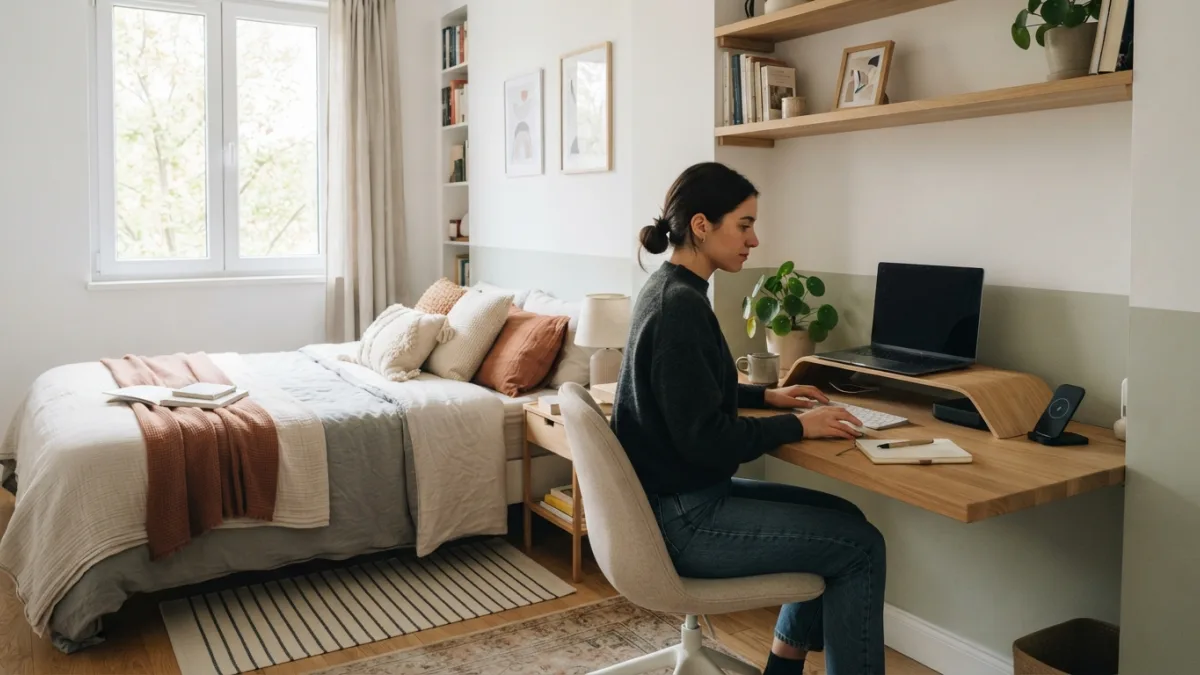
When the floor is full, use the wall. A foldable wall mounted desk sits flat against the wall when you finish and drops down when you start. Some models are just a hinged board, while others add shelves or a pinboard. Fixing one safely matters, because it will carry a laptop, your elbows, and probably a coffee. Find the wall studs or use anchors rated for the weight, and follow the maker’s instructions. Renters should ask the landlord before drilling. This approach suits any tight bedroom office layout, since the desk takes almost no room when closed. Just pair it with a chair that stores easily too.
3. Separate Workspace From Bed With Simple Zoning
Working a few steps from your pillow can blur the line between rest and work. To separate workspace from bed, create a visual and physical break. A tall bookshelf makes a solid divider, and a curtain on a ceiling track works when you want something lighter. A rug under the desk marks a “work zone” on the floor. Place the desk so you don’t see the bed while you work, or at least so your back faces it. Use a different lamp for work than the one by your pillow. These small signals help your mind switch modes, and they make it easier to close the laptop when the day ends. This connects closely with another common issue — see Small Home Office Ideas for Remote Workers in Studio Apartments for more on that.
4. Hide Desk at Night With Furniture That Closes
Some rooms are simply too small for a desk that stays out all day. If you need to hide desk at night, look at furniture that closes. A secretary desk has a hinged front that folds up and looks like a regular cabinet. A closet can become a tiny office if you remove the doors or add a shelf at table height. A rolling cart can park behind a door or beside the wardrobe. A folding screen also works well, and it’s cheap. Hiding your workspace has a bonus. When the laptop disappears, so does the temptation to answer one more email at ten at night.
5. Use Vertical Storage Ideas to Free the Floor
Floor space is limited, but wall space usually isn’t. These vertical storage ideas move clutter off your desk and out of your walking area. Mount floating shelves above the desk for books and files. Add a pegboard or wall rail for headphones, scissors, and notebooks. A tall, narrow bookcase beside the desk takes little floor and holds plenty. Hooks on the back of the door can carry bags and chargers. Keep things you use daily within arm’s reach and store the rest higher up. Don’t overdo it, though. Too many items on show makes a small room feel smaller, and it turns your bedroom office layout into visual noise. Baskets with lids hide the small stuff.
6. Fix the Mess With Desk Cable Management
Nothing makes a small room look messy faster than tangled wires. Good desk cable management keeps the setup calm and safe. Gather loose cords with clips, hook-and-loop ties, or a fabric sleeve. Run them along the back of the desk or down a table leg, and use adhesive hooks to keep them off the floor. A power strip fixed under the desk means one cable goes to the wall instead of five. Label each plug so you know what’s what. Keep cables away from bedding and curtains, avoid overloading a single socket, and never cover a power strip with fabric. Ten minutes of tidying can save you daily frustration. You might also find our article on Space Saving Desks: 10 Best Picks for Tiny Offices helpful here.
7. Plan Home Office Lighting Ideas Around Your Window
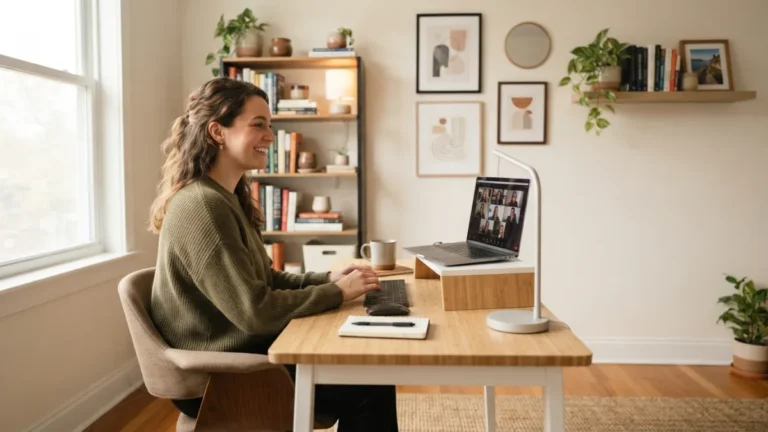
Bedrooms often have soft, dim lighting made for sleeping, not for screens. These home office lighting ideas help you work comfortably without redoing the room. Place your desk so the window is beside you, not behind or in front of your screen, which cuts glare. Add an adjustable desk lamp for cloudy days and evenings. A lamp with dimming gives you control as the day goes on. Avoid pointing a bright light straight at your monitor. When work ends, switch off the desk lamp and turn on your softer bedside light. That small ritual tells your brain the workday is over, and it keeps your bedroom office layout from taking over the room’s mood.
Ergonomic Chair Small Room Tips: Comfort Without the Bulk
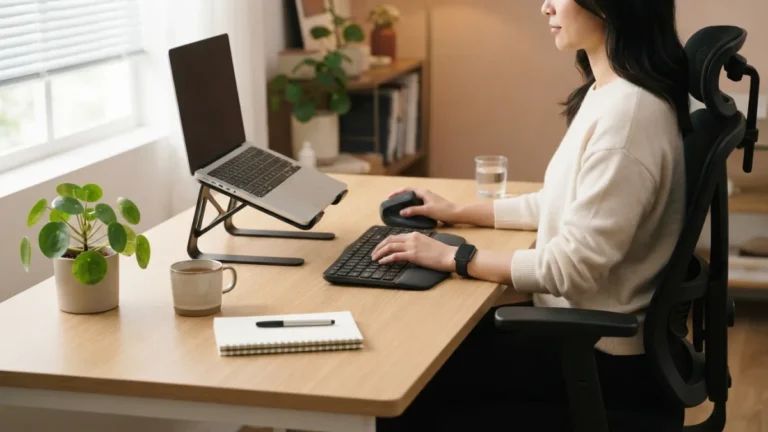
Even a perfect desk fails if the chair hurts your back. In a tight room, you need comfort and a small footprint. Look for height adjustment, back support, and a seat that lets your feet rest flat on the floor. Slim chairs without bulky arms tuck under the desk and free up walking space. Wheels help, but check that they suit your floor type. Your screen should sit roughly at eye level, and your forearms should rest comfortably at desk height. For a detailed checklist, see the OSHA computer workstations guide, or read the basics of ergonomics on Wikipedia. Skip the bed and sofa as daily seats, because they rarely support your back well.
Final Thoughts: Let the Room Do Two Jobs
A good bedroom office layout doesn’t need more space. It needs better choices. Start with the measurements, then pick one or two ideas that fit your room, such as a corner desk with shelves above it, or a fold-down table you can close at six. Add decent light, a supportive chair, and tidy cables, and the space starts to feel like a real workplace. Then make a clear end-of-day habit: fold, close, or cover the desk, and turn off the work lamp. Small rooms force you to be creative. Done well, yours can feel calmer and more focused than a bigger one. For a related walkthrough, check out Home Office Decor Ideas: 7 Easy Budget Looks for Zoom.
FAQ: Bedroom Office Layout for Small Spaces
What is the best bedroom office layout for a very small room?
Put a narrow desk in a corner or use a fold-down wall desk, then add shelves above it. Keep the desk away from the bed’s foot and leave a clear path to the door and wardrobe.
Can I work from my bed?
You can for short tasks, but it’s not a good daily habit. Beds rarely support your back and neck well, and working there can make it harder to relax at night. A small desk is a better choice.
How do I stop my bedroom from feeling like an office?
Use dividers, a rug, or a curtain to mark the work zone. Store your laptop and papers out of sight at the end of the day, and switch to softer lighting in the evening.
Is a foldable wall mounted desk strong enough for daily work?
Many are, if you install them correctly. Check the weight limit, fix the desk into wall studs or suitable anchors, and follow the manufacturer’s instructions.
How can I keep cables from cluttering a small desk?
Bundle cords with clips or sleeves, mount a power strip under the desk, and label each plug. Keep wires away from bedding and curtains.