Meal Prep Tips: 7 Easy Healthy Ideas for Remote Work
Working from home puts the fridge about ten steps from your desk. That can be a blessing or a trap. These meal prep tips help you eat well through a long workday without losing your lunch hour to a cooking marathon. When your office is also your kitchen, snacking often happens out of habit, boredom, or stress rather than real hunger. A bag of chips is easy. A planned plate takes a little thought. The good news is that a small amount of prep, done once or twice a week, can change your whole day. Below you’ll find seven simple ideas, from breakfast to hydration, that work with ordinary kitchens and normal budgets. Pick two or three to start, then build from there.
Why Meal Prep Tips Matter When Your Home Is Your Office
Remote work removes the small structures that once shaped your eating. There is no commute coffee, no office lunch crowd, no cafeteria line reminding you it’s noon. Instead, meetings run long, deadlines pile up, and suddenly it’s 3 p.m. and you haven’t eaten. That’s when the pantry starts calling. Planning ahead takes the decision out of those weak moments. Good meal prep tips don’t ask you to cook like a chef or eat the same dry chicken every day. They ask you to make healthy food the easiest option. A useful starting point is the U.S. government’s MyPlate guide, which suggests filling about half your plate with fruits and vegetables. Treat it as a loose guide, not a strict rulebook. If you want to dig deeper, our guide on How to Stay Social When You Work From Home Full-Time covers this in more detail.
Idea 1: Build a Weekly Meal Prep Plan
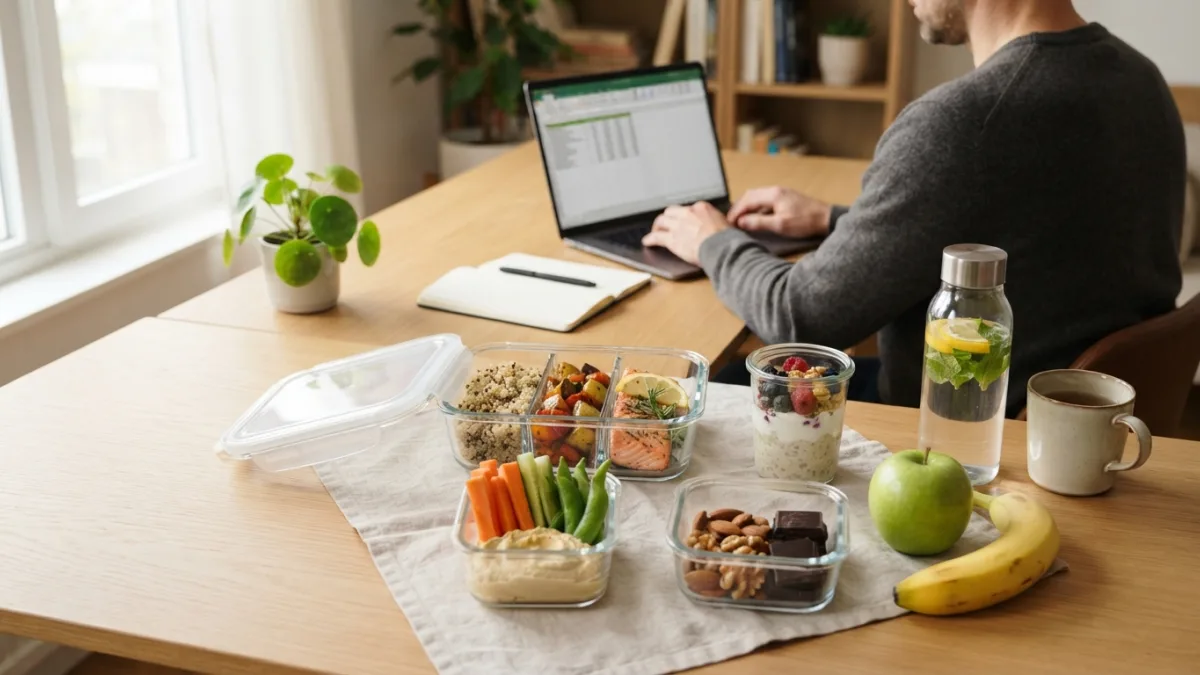
A weekly meal prep plan doesn’t need to be fancy. Pick one day, often Sunday, and spend an hour or two on the basics. Cook a big batch of grains, roast a tray of vegetables, and prepare one or two proteins. Then mix and match all week. Store everything in clear containers so you can see what you have. Food safety matters too. Cooked leftovers only stay good in the fridge for a few days, so freeze extra portions right away. The FoodSafety.gov website offers clear storage guidance. Here is a simple routine to follow:
- Check your calendar and mark the days with back-to-back meetings.
- Write a short shopping list built around two proteins, two grains, and several vegetables.
- Cook in batches and cool the food quickly before storing it.
- Label each container with the date.
The best meal prep tips are the ones you will actually repeat, so keep the plan small.
Idea 2: Set Up Make Ahead Breakfast Ideas
Mornings can feel rushed even when your commute is a walk down the hall. A ready breakfast keeps you from starting the day on coffee alone. Overnight oats are a classic: mix oats, milk or yogurt, and a spoonful of chia seeds in a jar, then top with fruit in the morning. Egg muffins baked in a muffin tin reheat in under a minute. Breakfast burritos wrapped in foil can sit in the freezer for weeks. If you like something lighter, portion fruit, spinach, and oats into smoothie bags and blend when you wake up. Choose one option, make six portions, and you’ve solved most of your week before the first email arrives. This connects closely with another common issue — see Work Home Boundaries: 7 Simple Steps for Bedroom Desks for more on that.
Idea 3: Pack Work From Home Lunch Ideas That Reheat Well
The best work from home lunch ideas share one trait: they taste good after a day or two in the fridge. Grain bowls are the easy winner. Layer rice or quinoa with roasted vegetables, beans or chicken, and a sauce kept in a separate small container. Soups and stews also improve over time, and they freeze well. Sheet-pan dinners double as lunches the next day. For hot days, try a chickpea salad stuffed into a pita, or pasta salad with plenty of vegetables. Keep sauces and crunchy toppings apart until you eat, so nothing turns soggy. A little variety matters, too. Change the sauce or spice and the same base feels like a brand-new meal.
Mindful eating at home is the other half of a good lunch. It’s tempting to eat over your keyboard while answering messages, but you often finish without remembering the meal. Try stepping away from your screen, even for fifteen minutes. Sit at a table, put your phone face down, and notice the flavors and textures. You may feel full sooner and enjoy the food more. It also gives your eyes and brain a real break, which makes the afternoon feel less heavy. If a full break isn’t possible, set one rule: no meetings or email during the first five minutes of your meal.
Idea 4: Stock Healthy Desk Snacks You Can Grab in a Minute
Healthy desk snacks work best when they are visible and require zero effort. Spend ten minutes after your weekly shopping washing, chopping, and portioning. Put single servings in small containers or bags, then place them at eye level in the fridge. Keep a few shelf-stable choices in a drawer near your workspace. When hunger hits during a call, you won’t wander to the cupboard and grab whatever is loudest. Try these easy options: You might also find our article on How to "Leave the Office" When You Work From Home helpful here.
- Carrot sticks, cucumber slices, or bell pepper strips with hummus
- Apple or pear slices with peanut or almond butter
- A small handful of unsalted nuts mixed with dried fruit
- Whole-grain crackers with cheese
- Air-popped popcorn in a reusable container
Idea 5: Keep High Protein Snacks Ready for Long Stretches
High protein snacks help you feel satisfied between meals, which is useful when a project keeps you at your desk for hours. The idea isn’t to chase huge numbers. It’s to add some protein to snacks that would otherwise be mostly carbohydrates. Hard-boiled eggs are the easiest place to begin, since you can cook a dozen at once. Greek yogurt, cottage cheese, and string cheese need no prep at all. Roasted chickpeas and edamame offer crunch and work for plant-based eaters. Tuna or salmon pouches pair well with crackers. If you enjoy cooking, bake a batch of homemade protein bites using oats, nut butter, and a little honey. Store them in the fridge and eat one when the afternoon drags.
Idea 6: Avoid Afternoon Energy Crash With Balanced Plates
You can often avoid afternoon energy crash by looking at what you ate at lunch. A meal made mostly of refined carbohydrates, like white pasta or a sugary drink, may leave you sleepy an hour later. A more balanced plate includes protein, fiber-rich vegetables or beans, whole grains, and a bit of healthy fat. The Harvard T.H. Chan School of Public Health explains this approach on its Nutrition Source website. Timing matters too. Skipping lunch usually leads to overeating later. Add a short walk after eating and some daylight if you can. Sleep plays a big part as well, so don’t expect food alone to fix a tired brain.
Idea 7: Stay Hydrated While Working With a Simple Routine
It’s easy to stay hydrated while working in an office where colleagues refill bottles around you. At home, nobody nudges you. Many people confuse mild thirst with hunger and reach for a snack instead. Fill a large bottle in the morning and keep it where you can see it. Link water to habits you already have: one glass before each meeting, one after each bathroom break. If plain water bores you, add lemon, cucumber, or mint, or drink herbal tea. Coffee can be part of your day, but it shouldn’t be your only drink. Your needs depend on your body, the weather, and your activity, so use pale yellow urine and how you feel as simple signals. For a related walkthrough, check out Online Community Ideas: 7 Best Picks for Remote Workers.
Make Your Meal Prep Tips Stick
You don’t need to do all seven ideas at once. Start with the one that solves your biggest daily problem. If you skip breakfast, prepare overnight oats. If you graze all afternoon, portion your snacks. After two weeks, add another habit. Expect imperfect weeks, too. Some days you’ll order takeout, and that’s fine. What matters is that you have a plan to return to. With a few containers, a short list, and an hour of weekend cooking, long remote workdays become easier to handle. You’ll waste less food, spend less money, and feel steadier from your first meeting to your last. Good food is one of the simplest ways to support your focus.
FAQ: Healthy Snacks and Meal Prep for Remote Workers
How long does prepped food stay fresh in the fridge?
Most cooked meals stay safe for about three to four days when stored in airtight containers. Freeze anything you won’t eat by then, and reheat food until it is steaming hot. Check official guidance from food safety agencies for specific foods.
How much time does meal prep take each week?
For many people, one to two hours is enough for a basic setup. You can also split the work into two shorter sessions, for example one on Sunday and one midweek, so the food stays fresh.
What are the best meal prep tips for beginners?
Start small. Prepare only lunches or only breakfasts for the first week. Use simple recipes, choose containers that stack well, and cook ingredients that mix in several ways instead of making five different meals.
What should I eat during a long workday to stay focused?
Aim for meals and snacks that combine protein, fiber, and some healthy fat, such as yogurt with fruit or hummus with vegetables. Regular meals, enough water, and short breaks usually help more than any single food.
How can I stop snacking out of boredom at home?
Pause and ask yourself whether you’re hungry or just need a break. Drink a glass of water, stretch, or take a short walk first. If you’re still hungry, choose a planned snack and eat it away from your screen.