Short Movement Routines: 7 Easy Breaks Between Zoom Calls
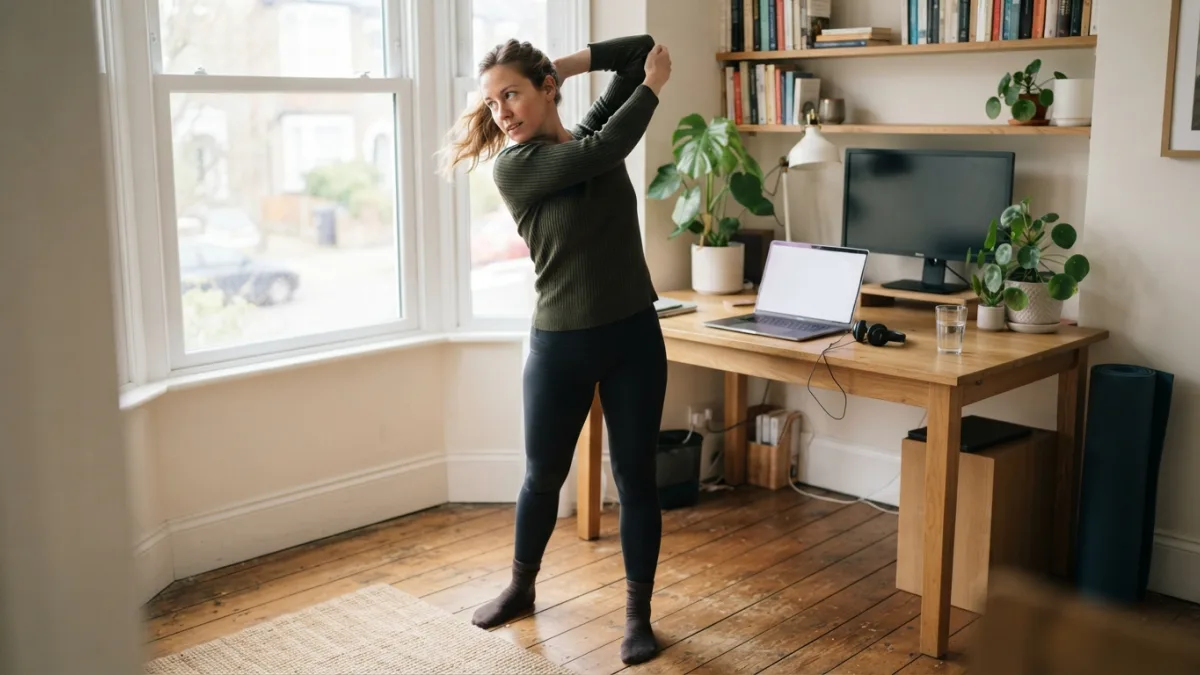
Your calendar says nine to five, but your body says it has been in the same chair since breakfast. Short movement routines can close that gap, even when you only have a few minutes between Zoom calls. You don’t need a gym, a yoga mat, or a change of clothes. You need a timer, a little floor space, and the habit of standing up when the meeting ends. This guide gives you seven easy breaks that fit into the gaps of a busy remote workday. Each one takes five minutes or less, works in normal work clothes, and needs no equipment. Pick the ones you like and try them tomorrow.
Sedentary Workday Health Risks: Why Those Gaps Matter
Long hours of sitting come with real costs for people who work from home. Without a commute, a walk to the meeting room, or a trip to the office coffee machine, many remote workers move far less than they used to. The World Health Organization advises adults to get at least 150 minutes of moderate physical activity a week, and its physical activity fact sheet also encourages people to limit the time they spend sitting. Short movement routines will not replace real exercise. But they break up long stretches in the chair, loosen stiff muscles, and give your brain a quick reset before the next call. Think of them as small deposits, not a full workout plan. If you want to dig deeper, our guide on Building Movement Into Your Remote Workday covers this in more detail.
How to Fit Short Movement Routines Around Your Calendar
The hard part is not the movement. It is remembering to do it. The trick is to attach each break to something that already happens in your day, so you never have to rely on willpower alone. When a call ends, stand up before you open your inbox. While the next meeting link loads, do one stretch. If you run meetings yourself, try ending five minutes early and invite everyone to stand and stretch. A few simple rules help these short movement routines stick:
- Use a trigger: link the break to a call ending, a kettle boiling, or a calendar reminder.
- Keep it small: a break you actually do beats a perfect plan you skip.
- Match the break to your body: tight neck, stiff wrists, or tired eyes each need a different move.
- Stay comfortable: move gently, never force a stretch, and stop if something hurts.
Seven Short Movement Routines for the Gaps Between Calls
1. Desk Stretches to Open Your Chest and Back
You can do this one without leaving your chair. Sit tall, clasp your hands behind your back, and gently squeeze your shoulder blades together. Hold for about 20 seconds. Next, reach both arms overhead, interlace your fingers, and lean slowly to the left, then to the right. Finish with a seated twist: place your right hand on your left knee and turn your upper body toward the left, then switch sides. Breathe slowly the whole time. If a stretch pinches, back off. This sequence takes about two minutes, which makes it one of the easiest short movement routines to try first. Do it while the next meeting room fills up.
2. Two Minute Workouts to Wake Up Your Legs
Sitting makes your legs heavy, so give them a quick job. Two minute workouts work best when the moves are simple and you don’t need to change clothes. Try this circuit, spending 30 seconds on each move: This connects closely with another common issue — see Mental Health Check In: 5 Simple Steps for Remote Workers for more on that.
- Bodyweight squats, going only as low as feels comfortable.
- Marching in place, lifting your knees.
- Wall push-ups, with your hands on the wall at chest height.
- Calf raises, holding the back of your chair for balance.
Keep the pace easy enough that you can still talk. You want to feel warmer, not exhausted, because you may be back on camera in minutes. If you have a health condition or an injury, check with a doctor before adding new exercise.
3. Neck Shoulder Tension Relief You Can Do on Camera
Neck shoulder tension relief starts with slowing down. Most of us climb toward our ears when we concentrate, and we don’t notice until it aches. First, drop your shoulders and take three slow breaths. Then tilt your right ear toward your right shoulder and hold for 15 seconds. Switch sides. Next, tuck your chin slightly, as if making a gentle double chin, and hold for five seconds. Finish with five slow shoulder rolls backward. Move gently and never crank your neck in a circle. If you notice numbness, tingling, or pain that does not go away, talk to a health professional rather than stretching through it.
4. Wrist Stretches for Typing and Mouse Work
Your hands do thousands of small movements a day, so they deserve a break too. Try these wrist stretches for typing between calls. Hold one arm straight out with your palm up, then use your other hand to pull the fingers gently toward the floor. Hold for 15 to 20 seconds. Flip your palm down and repeat. Then make a loose fist, open your hand wide, and spread your fingers five times. Finish by shaking out both hands like you are drying them. Keep every stretch mild. You should feel a light pull, not pain. Also check that your wrists stay fairly straight while you type. You might also find our article on Work Home Boundaries: 7 Simple Steps for Bedroom Desks helpful here.
5. Posture Reset Exercises for a Rounded Back
By the end of a long call, many people slump forward without noticing. Posture reset exercises help your body remember a more open position. Stand with your back against a wall, heels a few inches away, and try to touch the wall with your head, upper back, and hips. Slowly slide your arms up and down like a snow angel, keeping them as close to the wall as feels comfortable. Do eight to ten slow reps. Then stand tall, squeeze your shoulder blades, and take a deep breath. For setup advice on chairs, screens, and keyboards, see the OSHA computer workstations guide.
6. Home Office Walking Breaks That Clear Your Head
Walking is the simplest movement of all, and home office walking breaks need no planning. Walk a lap of your home, climb a flight of stairs, or step outside for a few minutes of fresh air. If you have a gap of ten minutes, a short loop around the block can feel like a mini commute. Audio-only calls give you another option: take them on foot with headphones. Walk while you refill your water bottle, too, so a basic habit does double duty. Wear comfortable shoes by the door if you can, since an easy exit makes you more likely to go.
7. Eye Strain Relief Breaks for Screen-Heavy Days
Video calls and spreadsheets keep your eyes locked on one distance for hours, and that can leave them dry and tired. Eye strain relief breaks are quick and free. Many eye care professionals suggest the 20-20-20 rule: every 20 minutes, look at something about 20 feet (6 meters) away for 20 seconds. Between calls, look out a window, blink slowly ten times, and let your eyes relax. You can also rub your palms together, warm them, and rest them gently over closed eyes for a few breaths. The Wikipedia page on computer vision syndrome explains common symptoms. If your eyes hurt often, book an eye exam. For a related walkthrough, check out How to "Leave the Office" When You Work From Home.
Make Short Movement Routines a Habit, Not a Chore
You don’t have to do all seven breaks every day. Start with one that fits your biggest problem, whether that is a stiff neck, sore wrists, or tired legs, and repeat it after your next three calls. Once it feels normal, add a second. Over time, short movement routines turn dead time between meetings into a small reset for your body and mind. They will not fix everything, and they don’t replace regular exercise or medical advice. But they cost almost nothing, they fit into any schedule, and they can make a long day at home feel a lot better.
FAQ: Short Movement Routines Between Zoom Calls
How long should a break between calls be?
Even one to five minutes helps. A quick stretch, a short walk, or a two-minute circuit is enough to interrupt long periods of sitting. Choose a length you can repeat every day.
How often should I move during the workday?
There is no single rule for everyone. A simple starting point is to stand up and move after each call, or at least once an hour. Adjust based on how your body feels.
Can short movement routines replace a workout?
No. They support your health by reducing long sitting time, but they are not a substitute for regular exercise. The WHO guidelines on weekly activity are a good reference for your overall goals.
Can I do these breaks in work clothes?
Yes. Every routine in this article works in everyday clothes and keeps sweating to a minimum. Choose gentler moves, such as stretches and walking, if you have a call right afterward.
What if a stretch causes pain?
Stop right away. Stretching should feel like a light pull, never sharp pain. If you have ongoing pain, numbness, or tingling, see a doctor or physical therapist for advice.