Home Office Decor Ideas: 7 Easy Budget Looks for Zoom
Your coworkers are judging your bookshelf. They won’t say it out loud, but they notice. The good news is that smart home office decor ideas don’t need a big budget, just a clear sense of what the camera sees. A messy laundry pile behind your chair can sink a great presentation. A tidy corner with one lamp and a plant can make you look calm and prepared. You don’t need a renovation or a trip to an expensive design store. Most of the changes below cost very little, and many use things you already own. Read on, pick the ones that fit your space, and be ready for your next meeting.
Start With What the Camera Actually Sees
Here’s a trick that saves money: decorate the frame, not the room. On a video call, people see your head, your shoulders, and a slim slice of the wall behind you. Everything outside that rectangle can stay as it is. Open your camera app, sit in your usual spot, and take a screenshot. Then look at it like a stranger would. The best home office decor ideas begin with that picture. Notice what draws the eye: a bright window, a stack of boxes, a crooked frame. Many photographers use the rule of thirds to place subjects, and you can borrow it. Keep your face near the center and put one interesting object off to a side. If you want to dig deeper, our guide on Small Home Office: 7 Best Desk Ideas to Save Space covers this in more detail.
7 Home Office Decor Ideas You Can Try This Weekend
1. Build a Budget Desk Setup That Looks Intentional
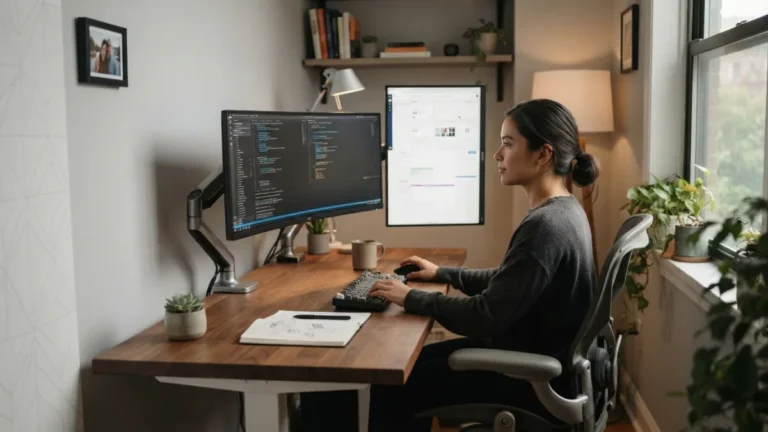
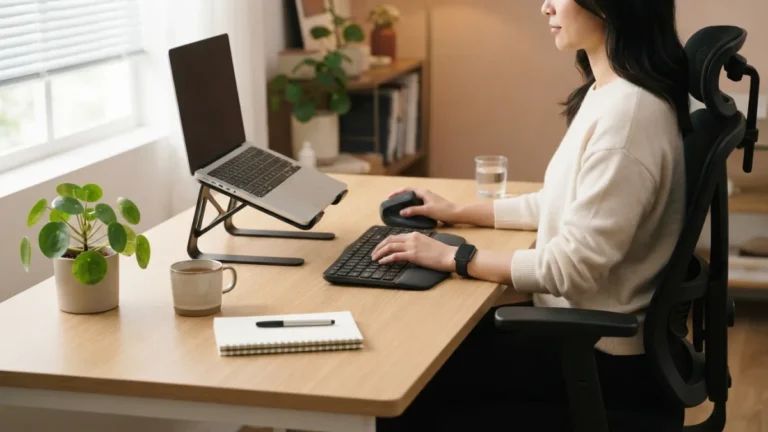
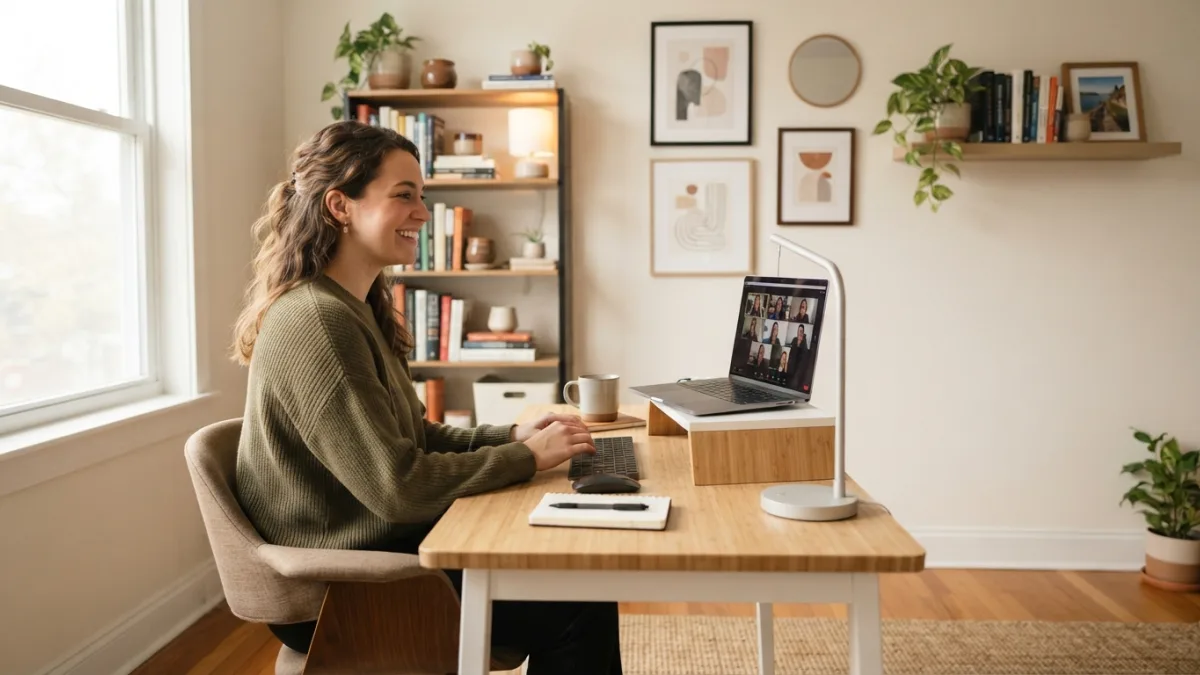
A budget desk setup looks expensive when everything on it has a purpose. Start with a plain table or a simple desk. Add a cloth desk mat or a large mouse pad to hide scratches and give the surface one clean color. Raise your laptop on a stack of sturdy books or a cheap stand, so the camera sits at eye level. Shooting from below is rarely flattering, and a small lift fixes it fast. Keep only what you use every day within reach: laptop, notebook, one mug. A tidy, simple desk reads as professional on screen, even if the table came from a garage sale.
2. Choose From These Zoom Background Ideas
You can pick from several zoom background ideas without buying much. The simplest is a calm wall in a soft color, with nothing on it. If your wall is plain white and feels cold, hang a curtain or a large fabric panel behind your chair. A shallow bookshelf also works well. Fill it only halfway, mix books lying flat with books standing up, and add one or two personal objects. Avoid doors that open behind you and avoid busy patterns that vibrate on camera. Virtual backgrounds can help in an emergency, but they often blur the edges of your hair and shoulders. A real, simple backdrop looks more natural and takes about ten minutes to set up.
3. Use Free Video Call Lighting Tips
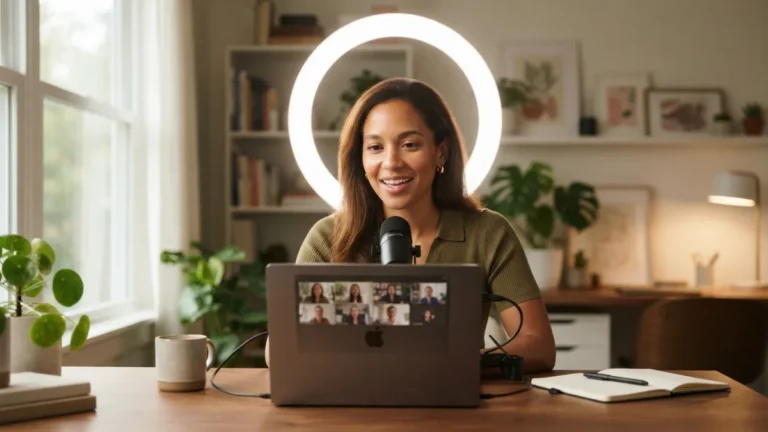
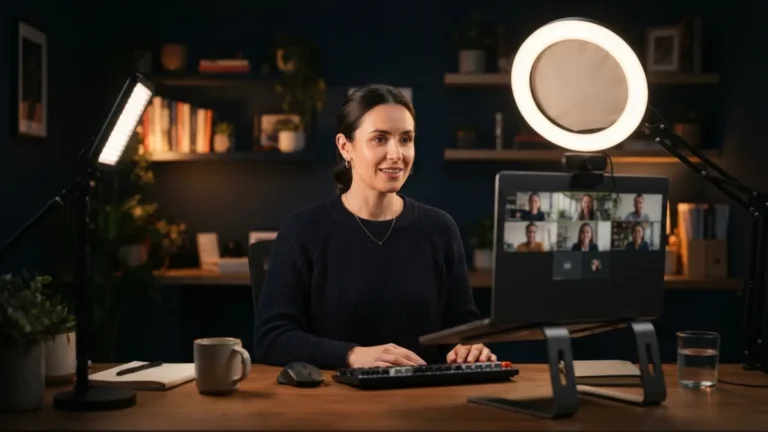
Good light matters more than a good camera, and these video call lighting tips cost almost nothing. First, face your light source. Sit facing a window so daylight falls on your face, never behind you, where it turns you into a silhouette. At night, put a lamp with a shade just behind your laptop. Second, match your bulbs. Mixing warm and cool bulbs creates odd color shifts, and the idea of color temperature explains why. Pick one type and stay with it. Third, avoid lighting only from above, which creates dark shadows under your eyes. If your room is dim, a white sheet of paper or foam board beside you can bounce light back onto your face. This connects closely with another common issue — see Small Home Office Ideas for Remote Workers in Studio Apartments for more on that.
4. Hang Affordable Office Wall Art
Blank walls feel cold on camera, but affordable office wall art fixes that without much spending. Print your own travel photos in black and white and put them in thrift-store frames. Download free public-domain artwork from museum websites and print it at a local copy shop. Frame a nice fabric scrap or a map of your city. One large piece usually looks better than five tiny ones, because it gives the eye a single place to rest. If you use glass frames, check your camera preview for glare from your lamp. Tilt the frame slightly forward or swap the glass for plain card backing if reflections show up.
5. Add Office Plants for Desk and Shelf
Choosing office plants for desk use is an easy way to bring life and color into the frame. Hardy plants like pothos or snake plants are popular because they forgive forgotten watering, and a small one costs very little. Not a plant person? A good artificial plant works fine on camera, and nobody can tell through a laptop lens. Place the plant to one side of your screen so it frames you instead of covering you. A taller plant on the floor behind your shoulder adds depth. Keep leaves trimmed and pots clean. A single healthy plant beats a crowded windowsill every time.
6. Try Desk Organization Ideas That Hide the Mess
Clutter shows up on camera fast, so try these desk organization ideas before your next call. Use a small tray to corral pens, sticky notes, and your phone. Drop loose cables into a few cheap clips or a box with a hole cut in the side. Keep one drawer, or even a lidded box, as your “everything else” spot, so you can sweep the desk clear in thirty seconds. Use jars and mugs you already own for pencils and scissors. Decide what belongs inside the camera frame and what doesn’t, then move the rest out of view. A clean surface also helps you focus, which is a nice bonus. You might also find our article on Space Saving Desks: 10 Best Picks for Tiny Offices helpful here.
7. Hunt for Cheap Office Furniture Finds
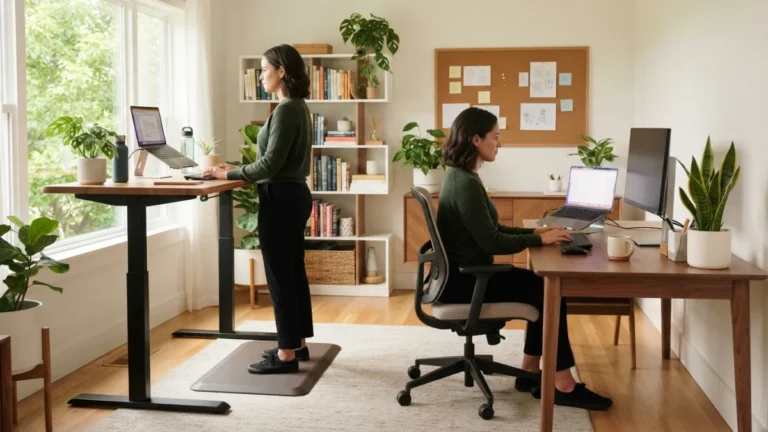
The best cheap office furniture finds usually turn up secondhand. Check local community marketplaces, thrift stores, and moving sales, where people often sell solid desks, shelves, and side tables for a fraction of the new price. Spend the most effort on your chair, since you sit in it for hours. Look for one that adjusts in height and supports your lower back. The U.S. Occupational Safety and Health Administration offers a helpful guide to computer workstation setup if you want to check your posture and screen position. A fresh coat of paint or new drawer handles can make an old piece look brand new.
Working in a Small Space Home Office? Think Vertical
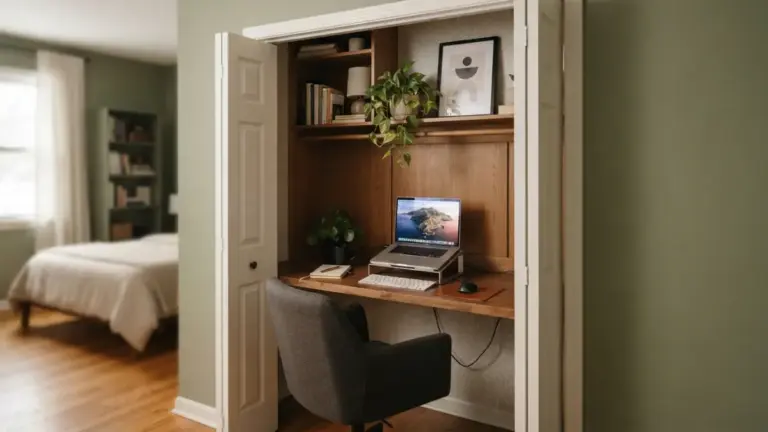
A small space home office can still look sharp on camera if you plan the layout around the frame. Face a wall or a tidy corner, so the camera sees something simple behind you. Use vertical space for storage: a narrow shelf above the desk, hooks for headphones and bags, a wall organizer for papers. If your office shares a bedroom or living room, a folding screen or a hanging curtain can hide a bed or a sofa. Choose a desk that folds or slides away when work ends. Light colors on the wall make a tiny room feel larger, and fewer, larger objects look calmer than many small ones.
Pick One Change and Start Tonight
You don’t need to do everything at once. Take that screenshot, spot the biggest distraction, and fix only that. Maybe it’s moving your lamp, or clearing the shelf behind you, or hanging one print. Small steps add up quickly, and most of these home office decor ideas take under an hour. A tidy, well-lit frame tells your colleagues you’re ready, and it helps you feel ready too. Spend a little, reuse what you have, and check your camera preview every time you change something. The goal isn’t a perfect magazine room. It’s a space that looks good, feels comfortable, and lets people focus on what you’re saying. For a related walkthrough, check out How to Set Up a Home Office in a Small Apartment.
FAQ: Budget Friendly Home Office Decor Ideas for Zoom
What is the cheapest way to improve my Zoom background?
Clear the clutter first. Remove anything distracting from the area behind you, then add one simple item, such as a plant, a framed print, or a lamp. A plain wall with good lighting often looks better than a crowded shelf.
Where should I place a lamp for video calls?
Put it in front of you, slightly to one side or just behind your laptop, so light falls on your face. Avoid placing it behind you. A shade helps soften the light and reduce harsh shadows.
Are virtual backgrounds better than a real one?
Not usually. Virtual backgrounds can blur the edges of your hair and shoulders and sometimes glitch when you move. A tidy real background looks more natural, though a virtual one helps if your space is truly messy.
How can I make a tiny room look good on camera?
Face a clear wall or corner, use vertical storage, and keep decor minimal. A folding screen or curtain can hide a bed or other distractions. Choose light colors and a few larger pieces instead of many small ones.
Do I need to buy new furniture to follow these home office decor ideas?
No. Start with what you own, then add secondhand pieces only where you need them. A comfortable chair matters most. Paint, new handles, and a desk mat can refresh older furniture for very little money.