
Remote Work Anxiety: 7 Simple Daily Habits to Stay Calm
Your laptop is open, your coffee is cold, and your chest already feels tight before the first meeting starts. If that sounds familiar, you are not alone. Remote work anxiety is a real and common experience for people who work from a kitchen table, a spare room, or a corner of the sofa. The good news is that you don’t need a big life change to feel better. Small habits, repeated every day, can ease the pressure and give your mind a place to rest. This guide covers seven simple ones you can start this week. None of them costs money, and most take only a few minutes. Pick one, try it for a few days, and add the next when you feel ready.
Why Remote Work Anxiety Builds Up So Easily
An office gives your day a built-in structure. You commute, you arrive, you leave, and your brain gets clear signals about when work starts and stops. At home, those edges blur. Your bedroom, your desk, and your dinner table may all sit within a few steps of each other. Messages can arrive at any hour, and many people feel they must prove they are working, even when no one is watching. Add less face-to-face contact, and worry can grow in the quiet. Signs include racing thoughts, a tight jaw, poor sleep, short temper, and trouble focusing. The National Institute of Mental Health explains common anxiety symptoms and when they may point to a disorder. Everyday work stress is normal, but it deserves attention before it piles up. If you want to dig deeper, our guide on How to Stay Social When You Work From Home Full-Time covers this in more detail. This is a common part of dealing with remote work anxiety, and it is worth keeping in mind.
Build a Work From Home Routine With Seven Small Habits
A work from home routine gives your day a shape, and a clear shape calms a busy mind. You don’t need a rigid schedule or a color-coded planner. You need a few anchors that tell your body when to wake up, when to focus, when to rest, and when to stop. The seven habits below follow the natural order of a day, from the first hour of the morning to the last hour before sleep. You can use all of them or only the ones that fit your life. If you share your space with kids, roommates, or a partner, adjust the details. What matters is repetition. A small habit done on most days beats a perfect plan you abandon by Thursday. Many people run into this exact issue with remote work anxiety at some point.
Habit 1: Try These Morning Routine Ideas to Start Calm
How you begin the day often sets the tone for the next eight hours. Many remote workers roll out of bed and straight into email, which tells the brain that the pressure has already started. Instead, give yourself a short buffer before work. Keep it simple and repeatable, and keep it free of screens if you can. Here are a few options to choose from: Keeping remote work anxiety in mind here will save you time later on.
- Wake up at a similar time each day, even if your schedule is flexible.
- Drink a glass of water and open a window or step outside for daylight.
- Take a ten-minute “fake commute” walk around the block, then return to your desk.
- Eat breakfast away from your laptop.
Choose one or two. The point isn’t to be productive before breakfast. It is to enter your workday on your own terms instead of reacting to your inbox. This detail matters more than it seems once remote work anxiety comes up again.
Habit 2: Create a Home Office Setup That Protects Your Mind
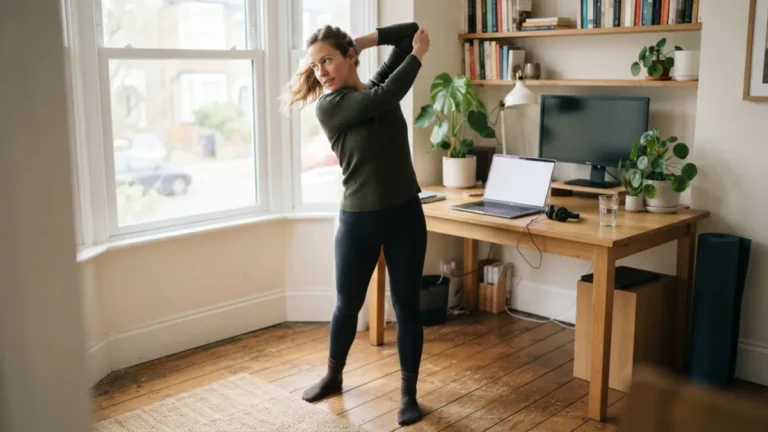
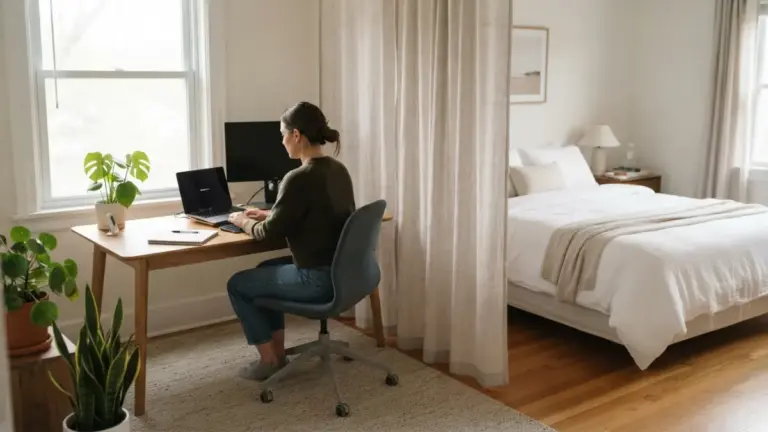
A good home office setup does more than support your back. It also tells your brain, “This is where work happens.” If you work from the couch, your body never fully relaxes there, and it never fully focuses either. A dedicated spot helps, even if it is only one end of a table. Put your screen at eye level, use a chair that supports you, and add soft light so your eyes don’t strain. Clear away clutter, since a messy desk can add to a messy mood. Don’t have a spare room? Keep your work items in a box or tray, and put it away when you finish. That small act closes the “office” and gives your home back to you. This connects closely with another common issue — see How to "Leave the Office" When You Work From Home for more on that. It is one of those small things that makes remote work anxiety easier to manage overall.
Habit 3: Draw Clear Work Life Boundaries
Work life boundaries are the lines that keep your job from spilling into every hour. Without them, remote work anxiety can feel constant, because there is always one more message to answer. Start by choosing a clear start time and end time, and share them with your team. Use your calendar or chat status to show when you are available. Turn off work notifications after hours, or at least mute them on your phone. Then add a short shutdown ritual: review what you finished, write down tomorrow’s top three tasks, close your laptop, and say “done” out loud if it helps. It may feel silly at first. It works because it gives your mind permission to stop. This is a common part of dealing with remote work anxiety, and it is worth keeping in mind.
Habit 4: Use Breathing Exercises for Stress Before Tense Moments
Breathing exercises for stress are among the fastest tools you can use, because you carry them everywhere. Try them before a big call, after a tough email, or any time your shoulders creep toward your ears. One easy method: breathe in through your nose for a count of four, then breathe out slowly through your mouth for a count of six. A longer exhale often helps the body settle. Repeat for one or two minutes. Another option is box breathing, where you inhale, hold, exhale, and hold for equal counts of four. Keep your breath gentle, never forced. If you feel dizzy, stop and breathe normally. Practice when you feel fine, so the habit is ready when you need it. Many people run into this exact issue with remote work anxiety at some point.
Habit 5: Schedule Short Mindfulness Breaks
Short mindfulness breaks help you step out of the mental loop that anxiety creates. Mindfulness simply means paying attention to the present moment without judging it. The National Center for Complementary and Integrative Health offers a clear overview of meditation and mindfulness if you want to learn more. You don’t need a cushion or an app. Set a timer for every hour or two, then pause for two to five minutes. Look away from your screen and name five things you can see. Feel your feet on the floor. Notice the sounds in the room. Then stretch and return to work. These pauses won’t slow you down. Many people find they come back with a clearer head. Keeping remote work anxiety in mind here will save you time later on.
Habit 6: Treat Remote Work Loneliness as a Real Problem
Remote work loneliness can sneak up on you, especially if your days are made of chat messages and muted video squares. Isolation can also feed remote work anxiety, because small worries have no one to bounce off. So build contact into your week on purpose. Swap a text for a quick call. Schedule a virtual coffee with a teammate, with no agenda. Work from a library or café once in a while if that is an option. Outside work, plan something with people you like, such as a walk with a neighbor or a weekly call with a friend. You don’t need a big social life. A few steady, friendly connections can make home feel less like an island. You might also find our article on Remote Work and Sleep: 7 Easy Evening Habits to Unwind helpful here. This detail matters more than it seems once remote work anxiety comes up again.
Habit 7: Close the Day With Digital Detox Tips
Good digital detox tips can protect your evenings, and your sleep along with them. After hours of screens, your brain may still be scrolling long after you stop. The idea behind a digital detox is simple: take planned time away from your devices. You don’t have to quit technology. Start small with changes like these: It is one of those small things that makes remote work anxiety easier to manage overall.
- Log out of work email and chat on your phone, or mute them after your end time.
- Keep your phone charging outside the bedroom.
- Make the last hour before bed screen-light, with a book, music, or a shower instead.
- Do something with your hands, like cooking or tidying, to mark the shift from work to rest.
Your evening should belong to you, not your notifications. This is a common part of dealing with remote work anxiety, and it is worth keeping in mind.
Keep Going, and Know When to Ask for Help
These habits work best when you treat them as practice, not a test. Some days you will skip the walk, check email at 9 p.m., or forget to breathe. That is fine. Start again the next morning. If you want a simple plan, pick the habit that feels easiest and repeat it for a week. Then add another. Still, habits have limits. If your anxiety stays strong for weeks, disrupts your sleep, or makes it hard to do your job or enjoy life, talk to a doctor or a licensed mental health professional. Reaching out is a sign of strength, not weakness. With small steps and the right support, remote work anxiety can become something you manage instead of something that manages you. Many people run into this exact issue with remote work anxiety at some point.
Remote Work Anxiety: Frequently Asked Questions
What is remote work anxiety?
It is the worry, tension, or unease that can come from working at home. Common triggers include blurred boundaries, constant connectivity, isolation, and pressure to appear productive. It is not an official medical diagnosis on its own, but the feelings are real and worth taking seriously. For a related walkthrough, check out Online Community Ideas: 7 Best Picks for Remote Workers. Keeping remote work anxiety in mind here will save you time later on.
How quickly can daily habits help?
It varies by person. Some people feel a little calmer right after a breathing exercise or a short walk. Bigger changes in sleep, mood, and focus usually take more time and steady practice. Be patient, and track what helps you. This detail matters more than it seems once remote work anxiety comes up again.
Do I need a separate room to work from home?
No. A dedicated corner, a tidy table, or even a work box that you put away each evening can do the job. What matters is a clear signal that work has started and ended. It is one of those small things that makes remote work anxiety easier to manage overall.
Which habit should I start with?
Start with the one that feels easiest. For many people, that is a fixed end-of-day time or a short walk before work. A small win builds confidence, and you can add more habits later.
When should I see a professional?
Seek help if anxiety lasts for weeks, affects your sleep, appetite, or relationships, or makes daily tasks feel impossible. A doctor or licensed therapist can offer support that fits your situation. If you ever feel unsafe, contact your local emergency services right away.

Ghani Mejber — Founder & Lead Editor
Ghani Mejber is the founder and lead editor of Remote Work Routine. Having navigated the transition to full-time remote work firsthand, Ghani tests home office ergonomics, time-blocking workflows, and productivity software to help remote professionals structure their days and avoid burnout.